This painting is a cartography of the self. It maps the conscious and subconscious in the structural form of a mandala · a form in which the self is always at the centre, and meaning radiates outward in all directions simultaneously. The composition spirals from its core toward its edges, moving through time, through memory, through the layered sediment of a life. It is, in the most precise sense, an autobiography painted in the language of the tradition that was never used for such a subject.
"The court painters documented the kings. I decided to document myself · my memories, my mind, my wounds, and the world that shaped them. The nama is mine."
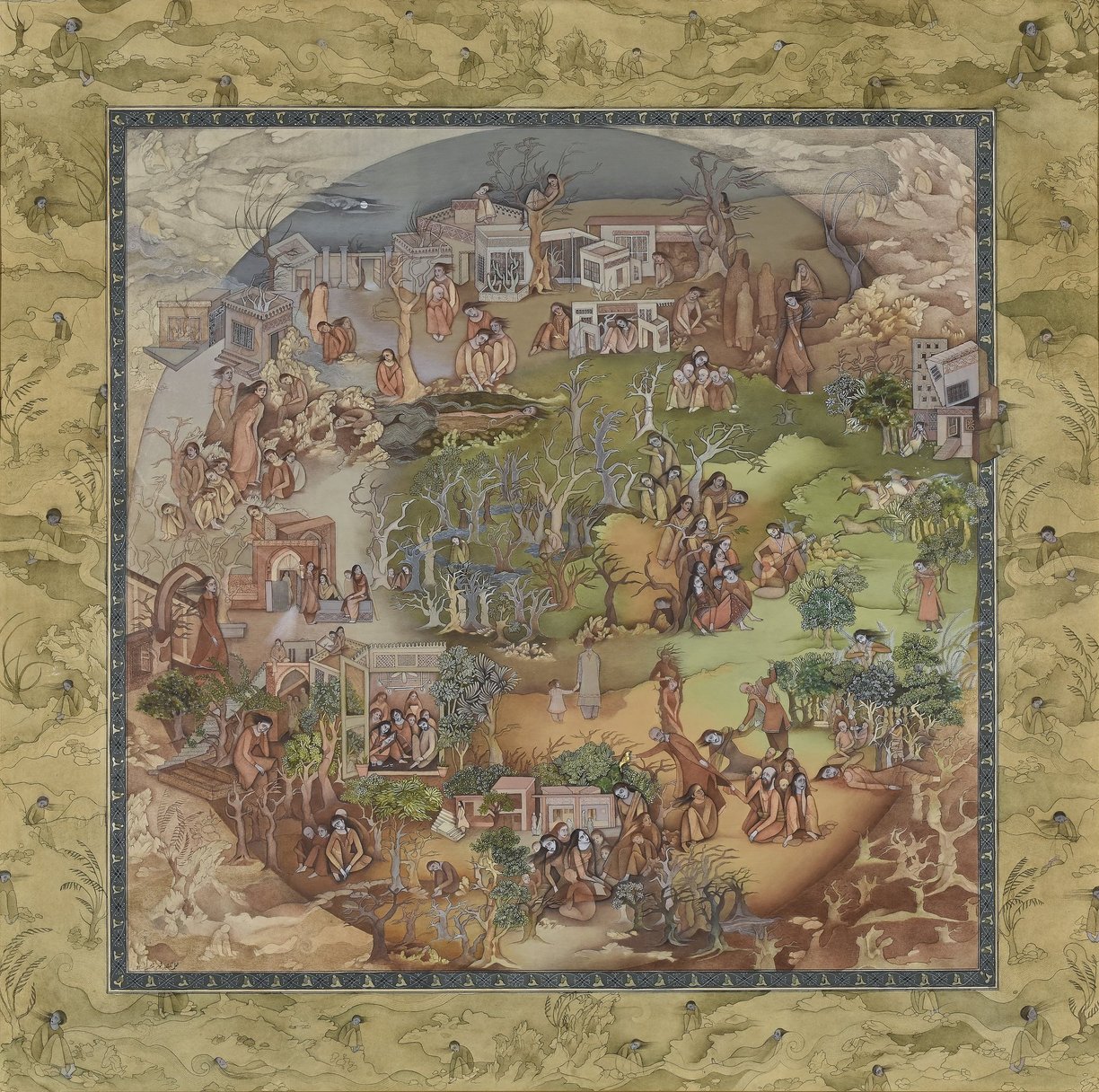
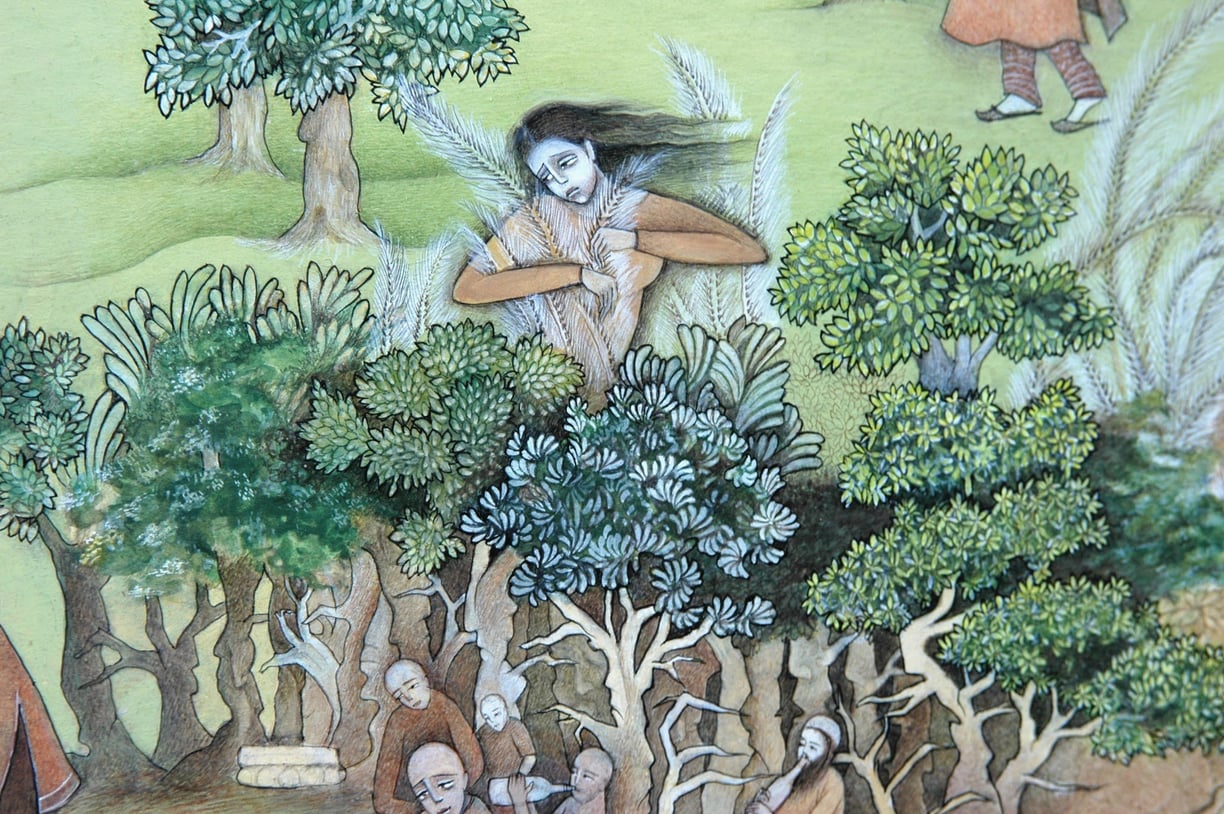
The painting is organised as a mandala · a large square field within a teal jidwal border · with the self at its centre: a child, surrounded by a forest. The forest is both literal memory and metaphor · the dense, undifferentiated world of early childhood before the self has learned to read what surrounds it.
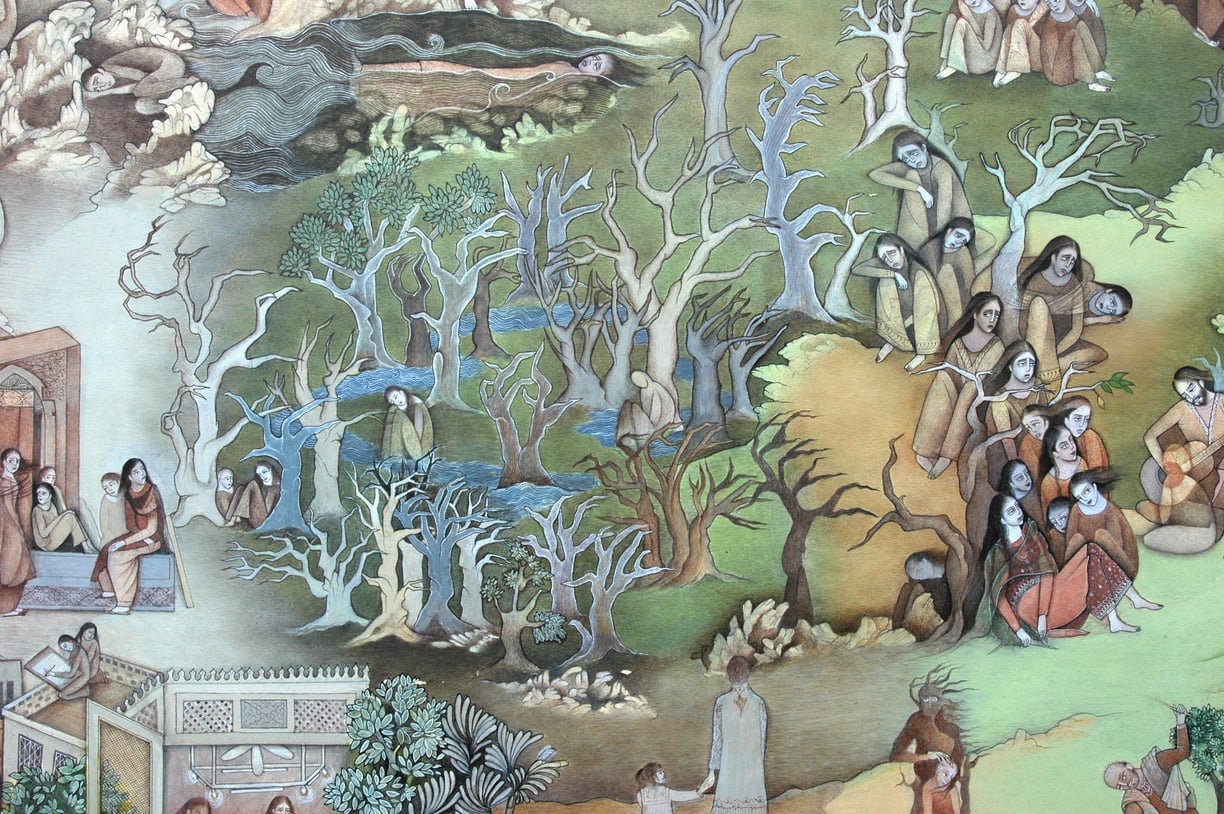
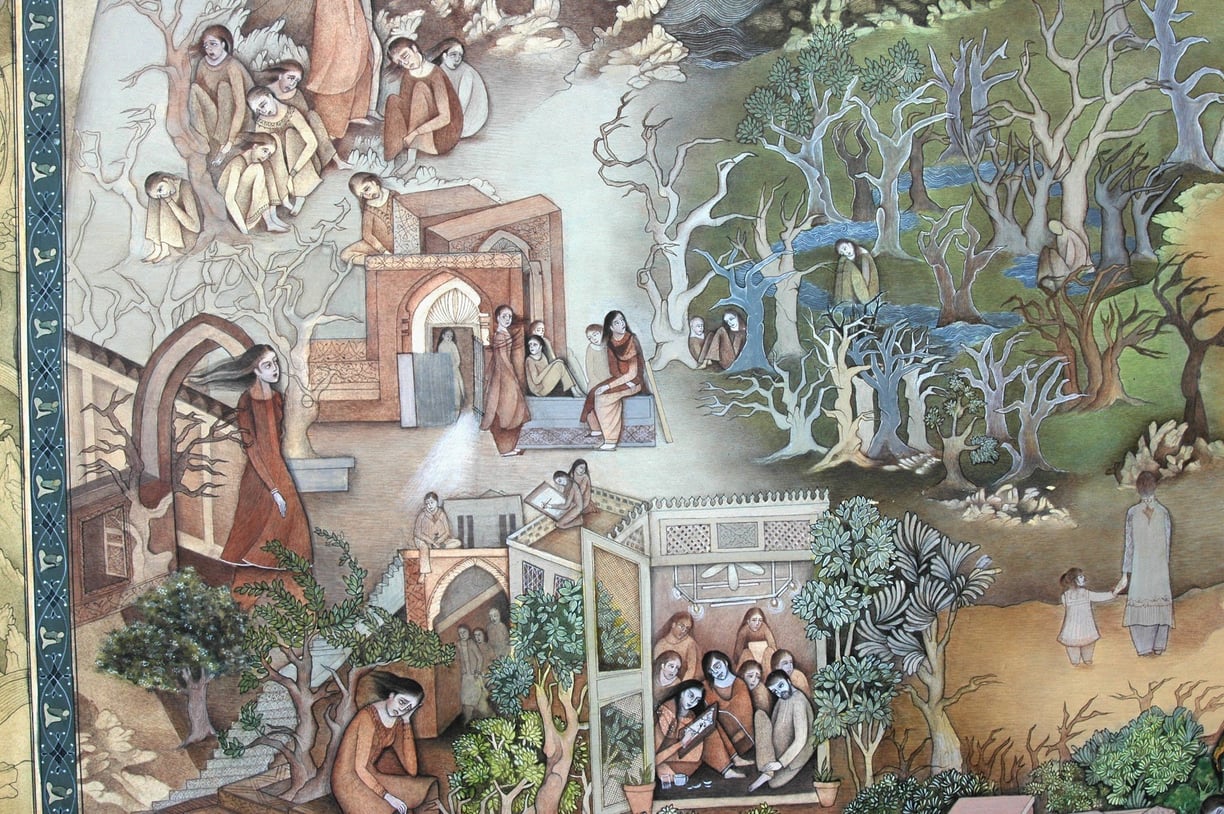
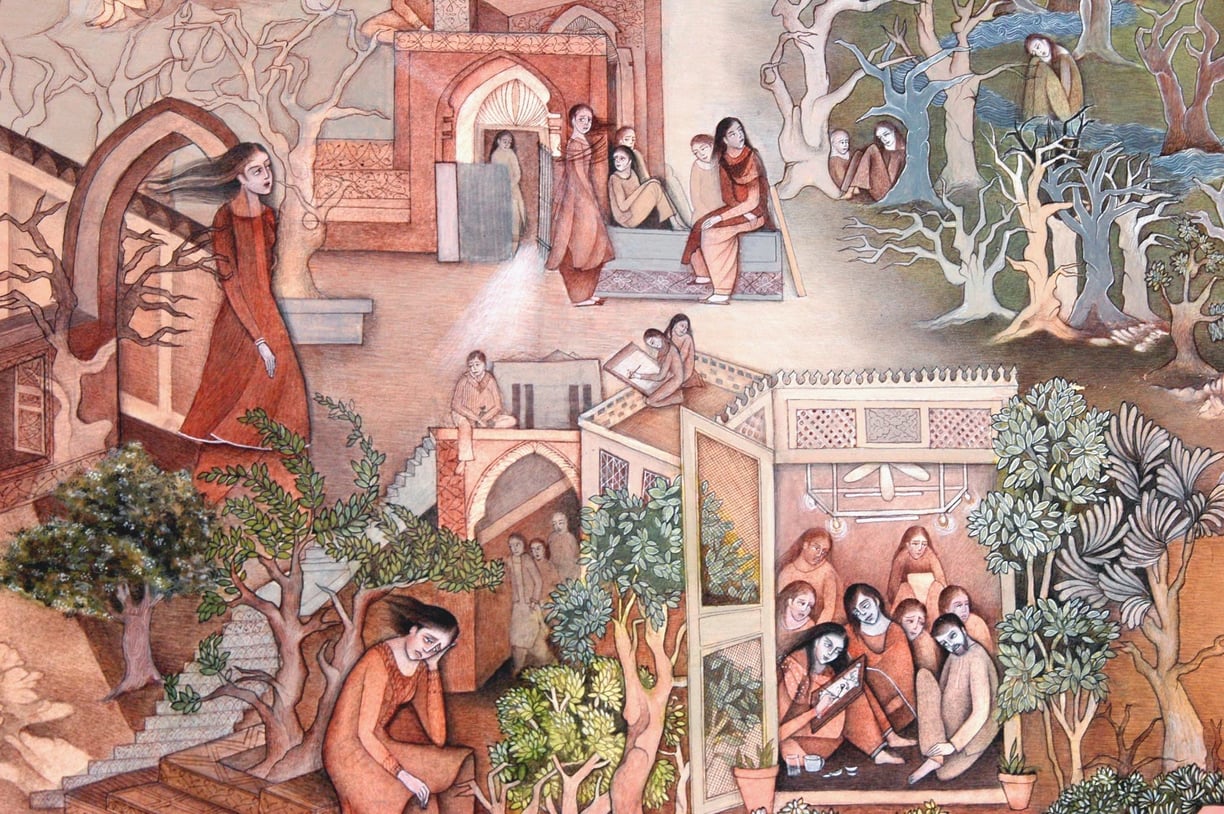
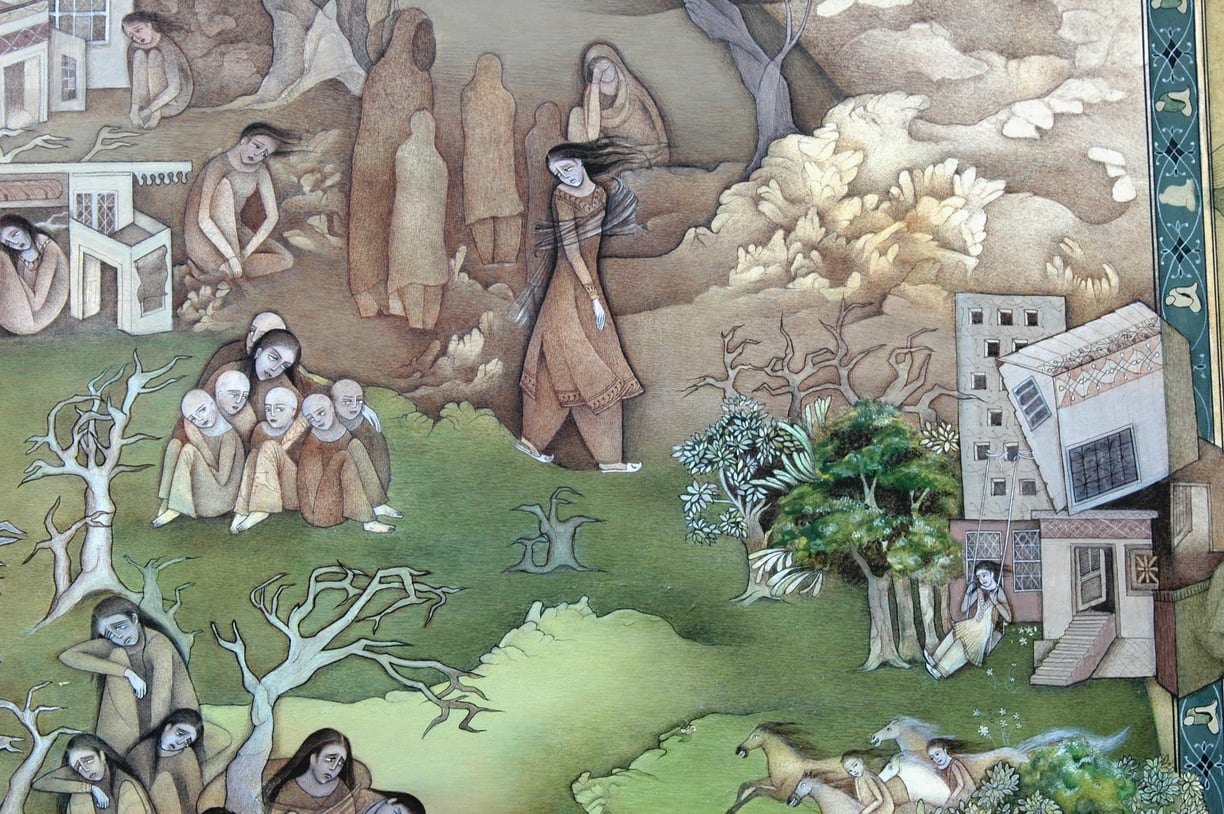
Childhood opens first: a father who protected his daughters · a rare shelter in a landscape already shaped by patriarchy · set against a mother's unspoken preference for the male child. The architecture of the childhood home appears, recognisable and particular, as it exists only in memory.
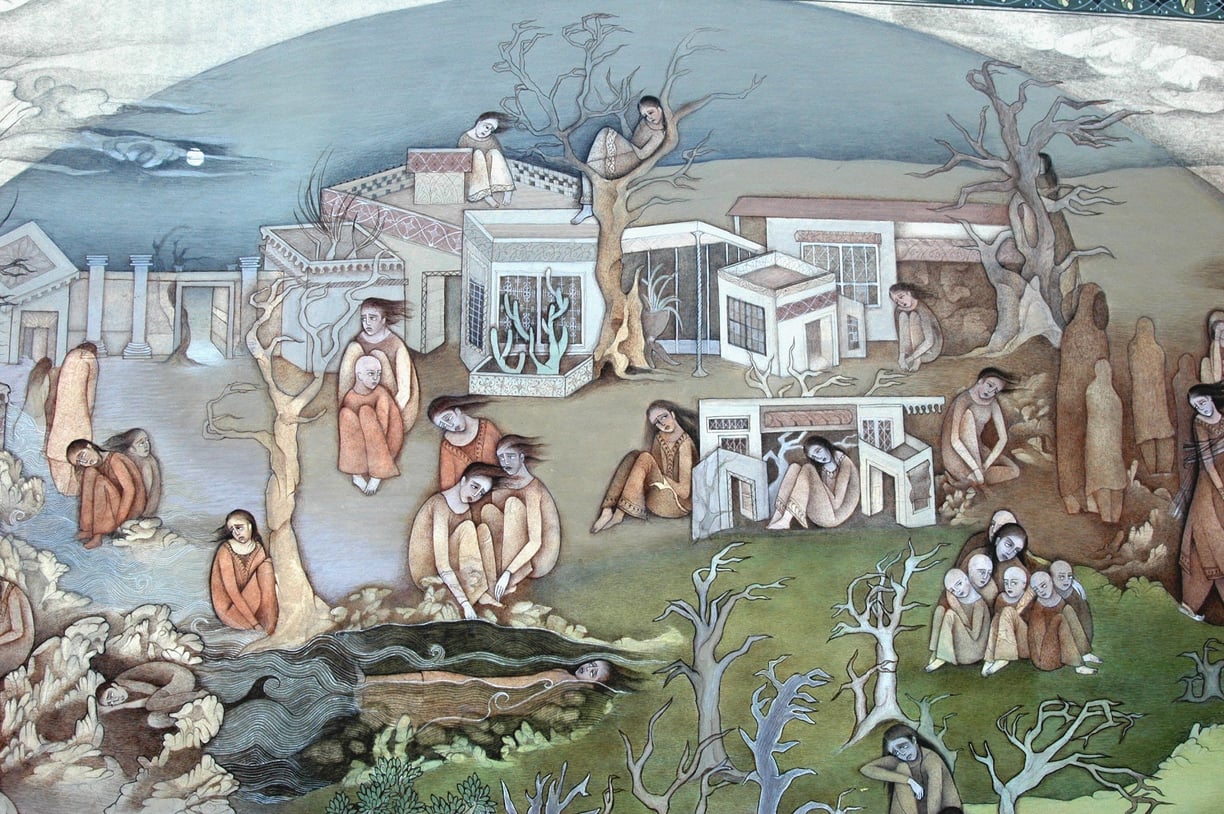
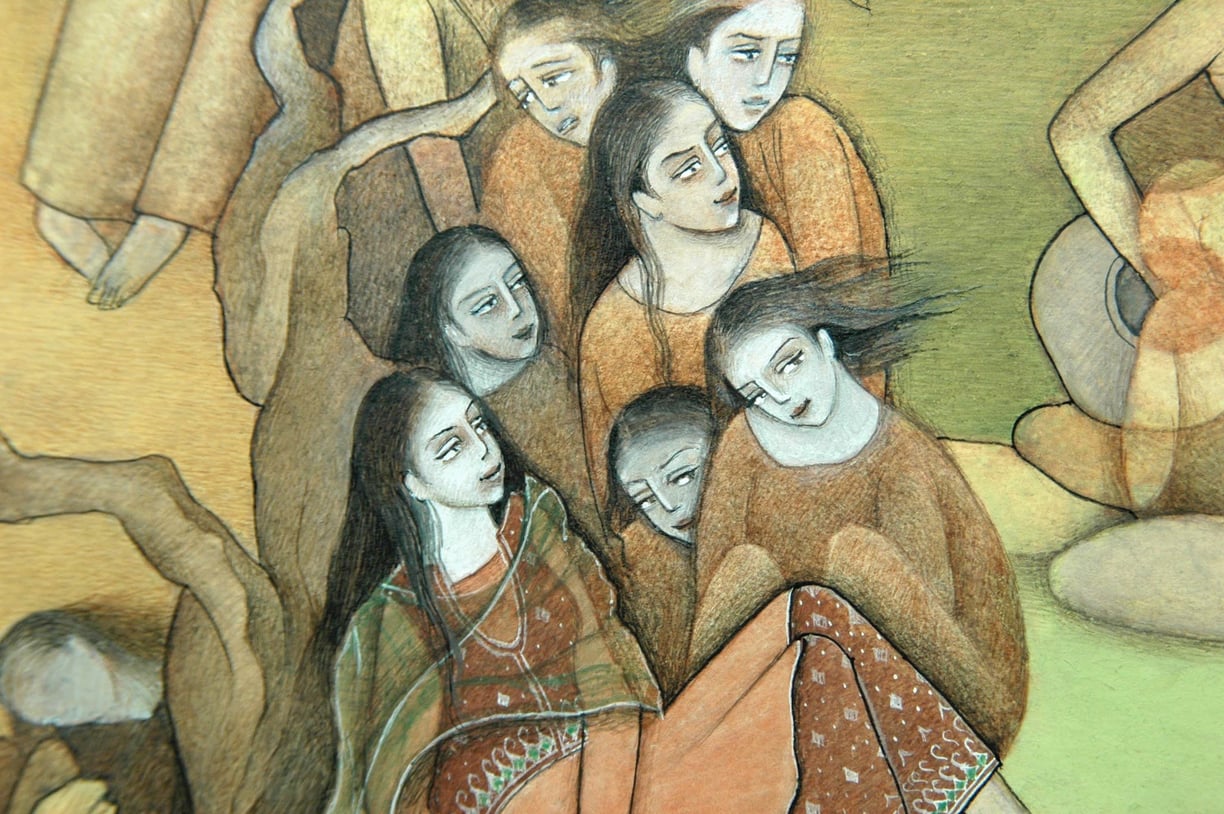
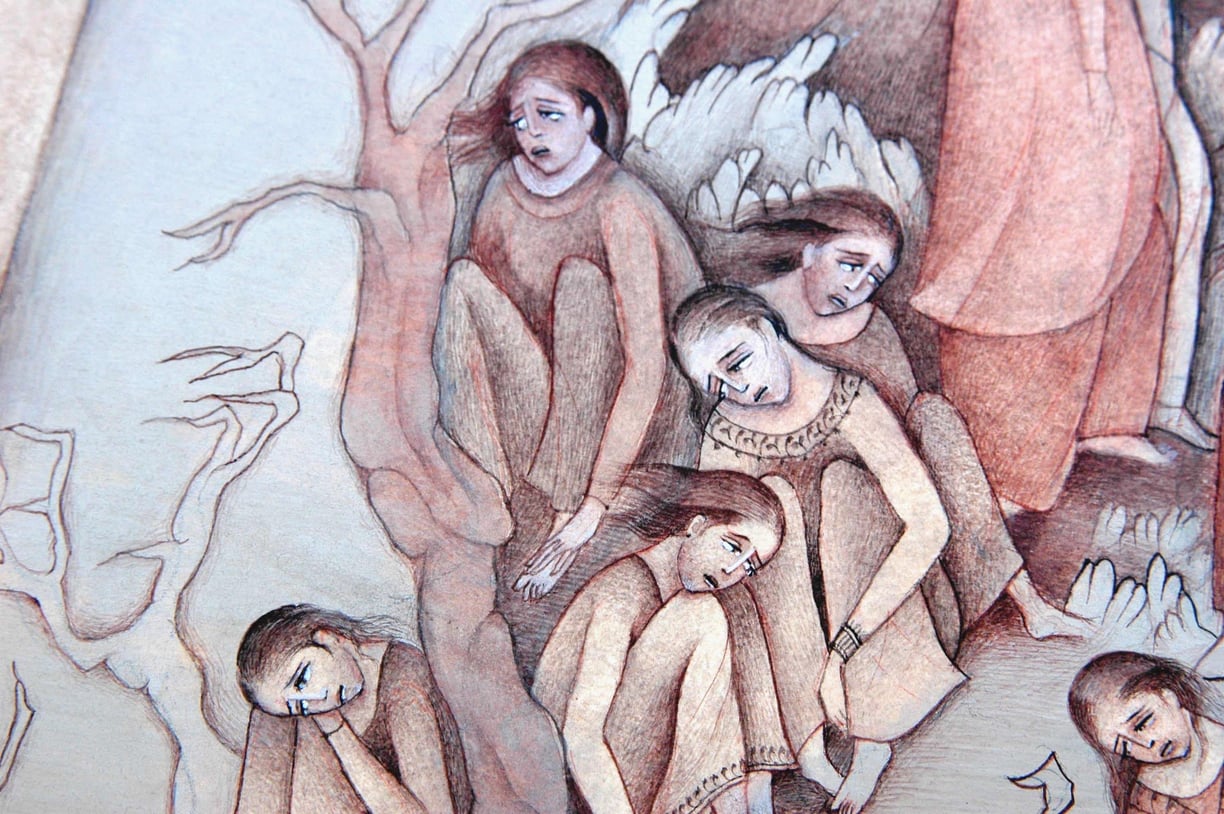
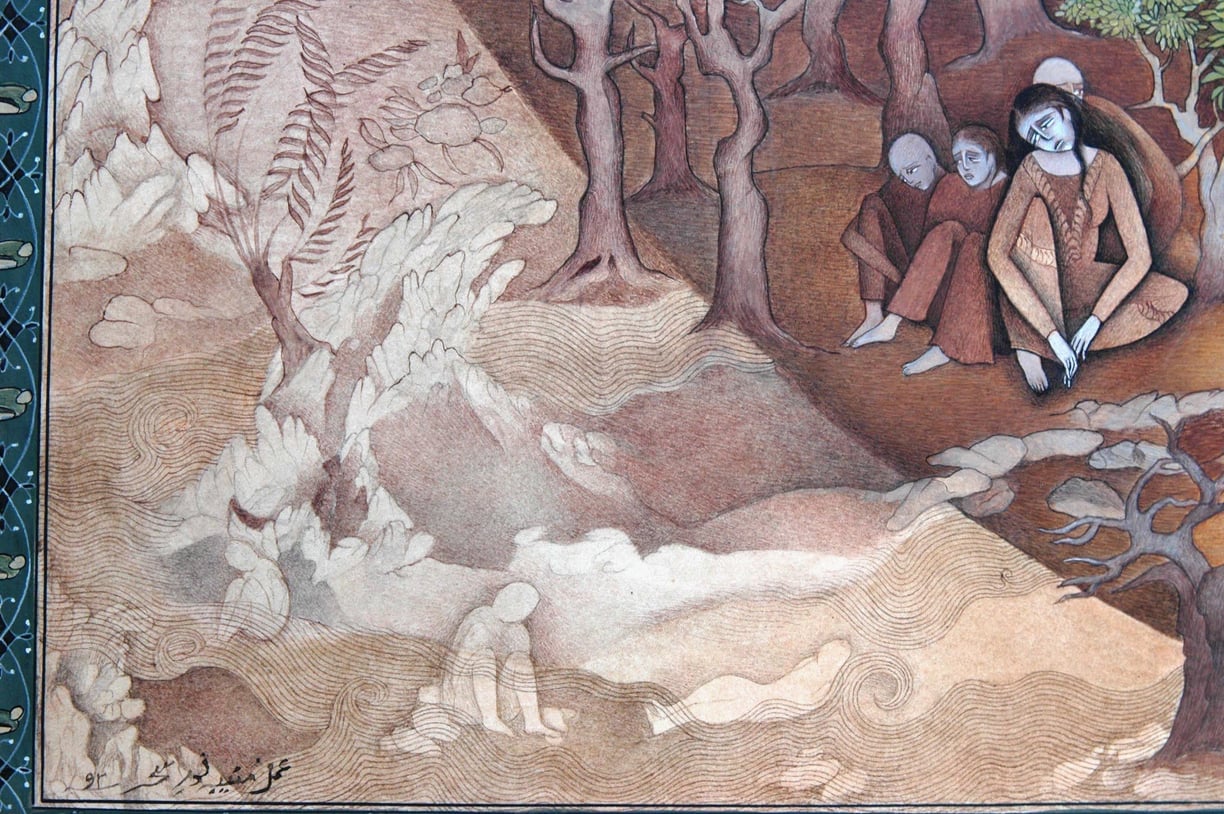
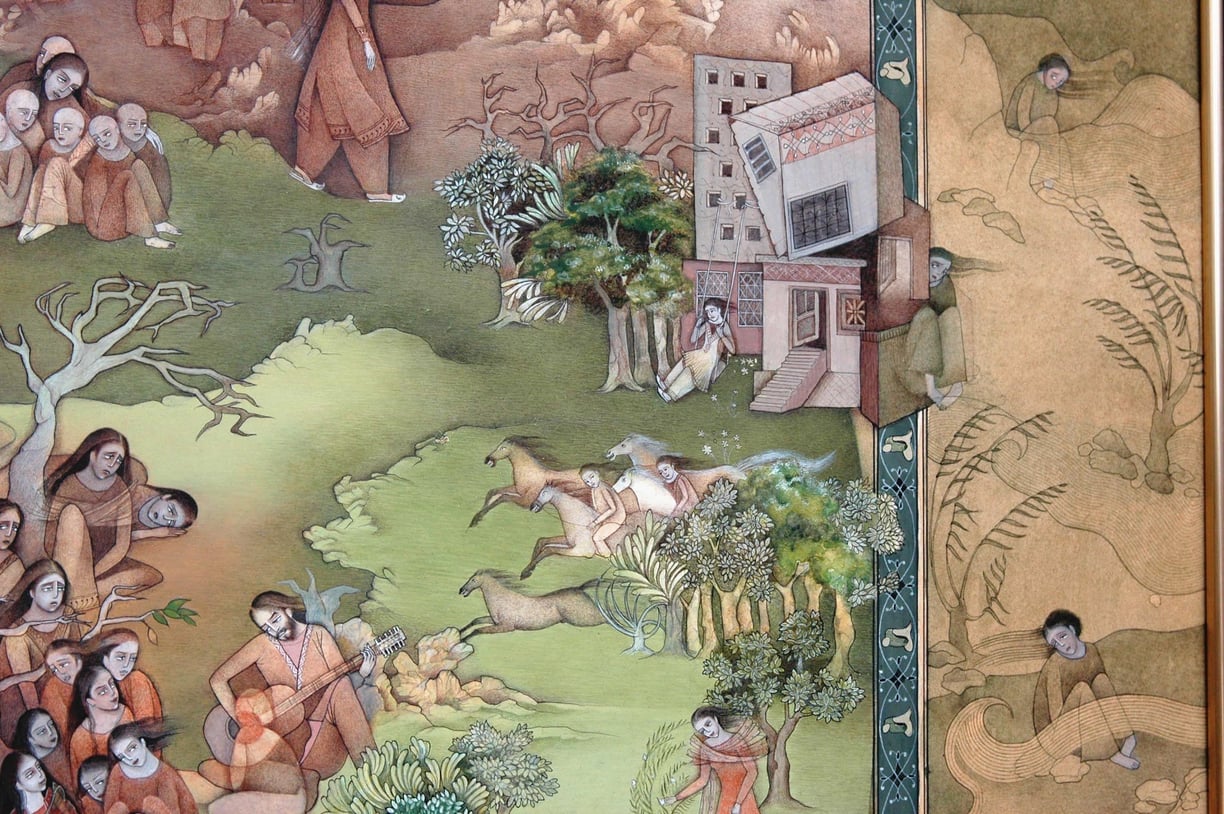
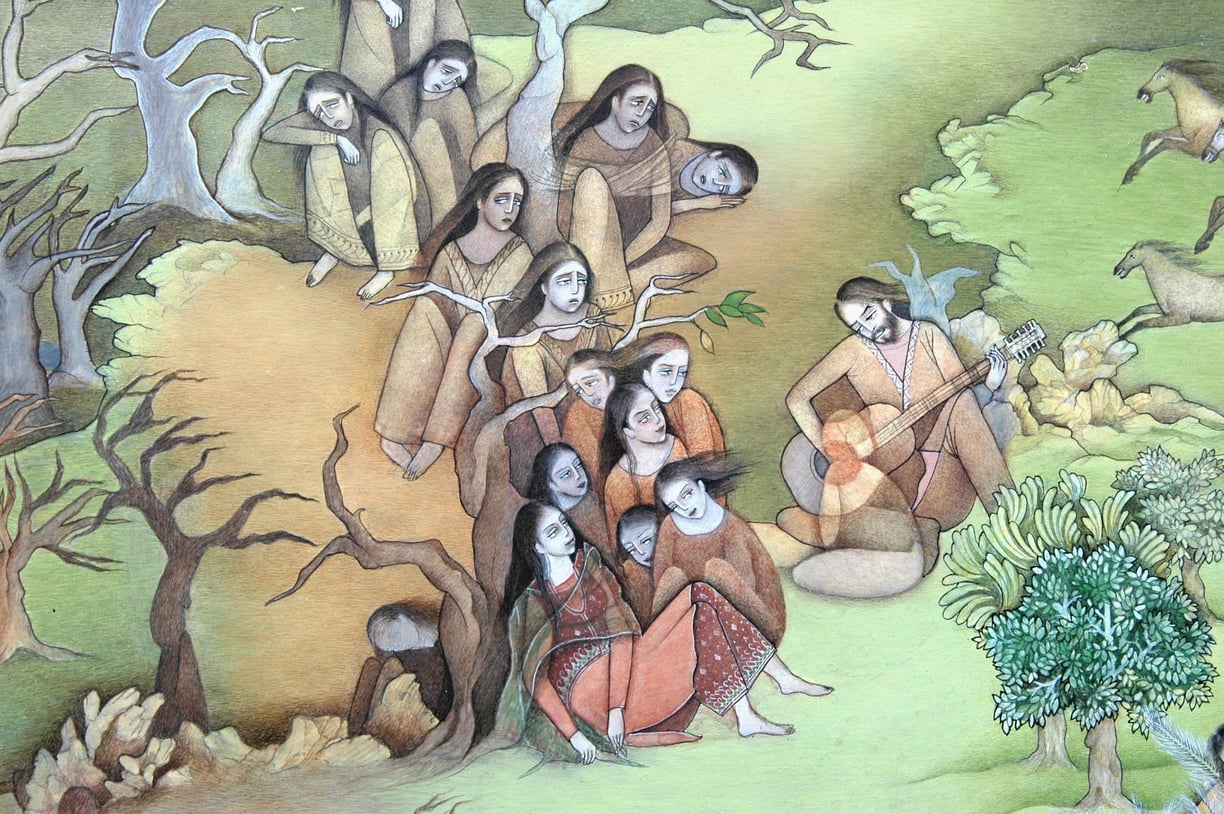
A romantic era · horses, swings, music, an imaginary male figure in a positive role · the paradise of a young woman's interior world, briefly radiant. The spiral turns outward, beyond that garden.
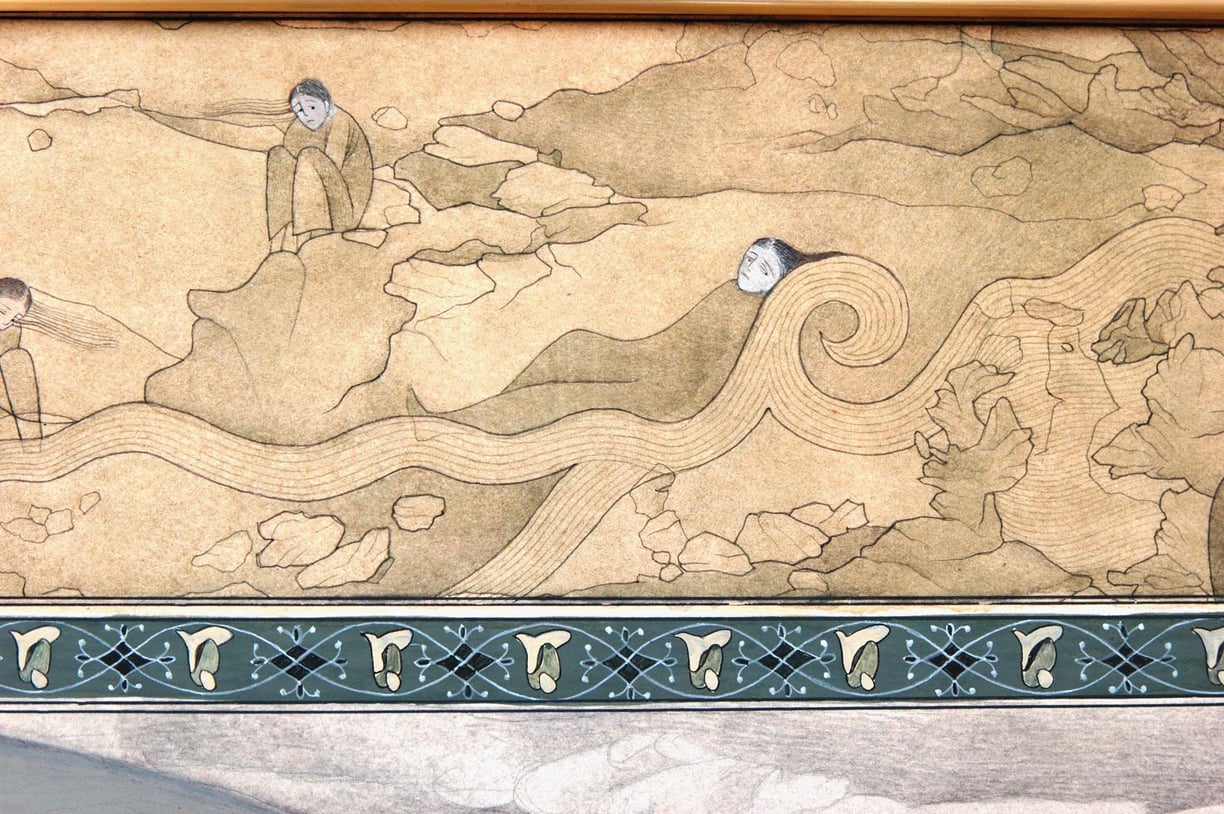
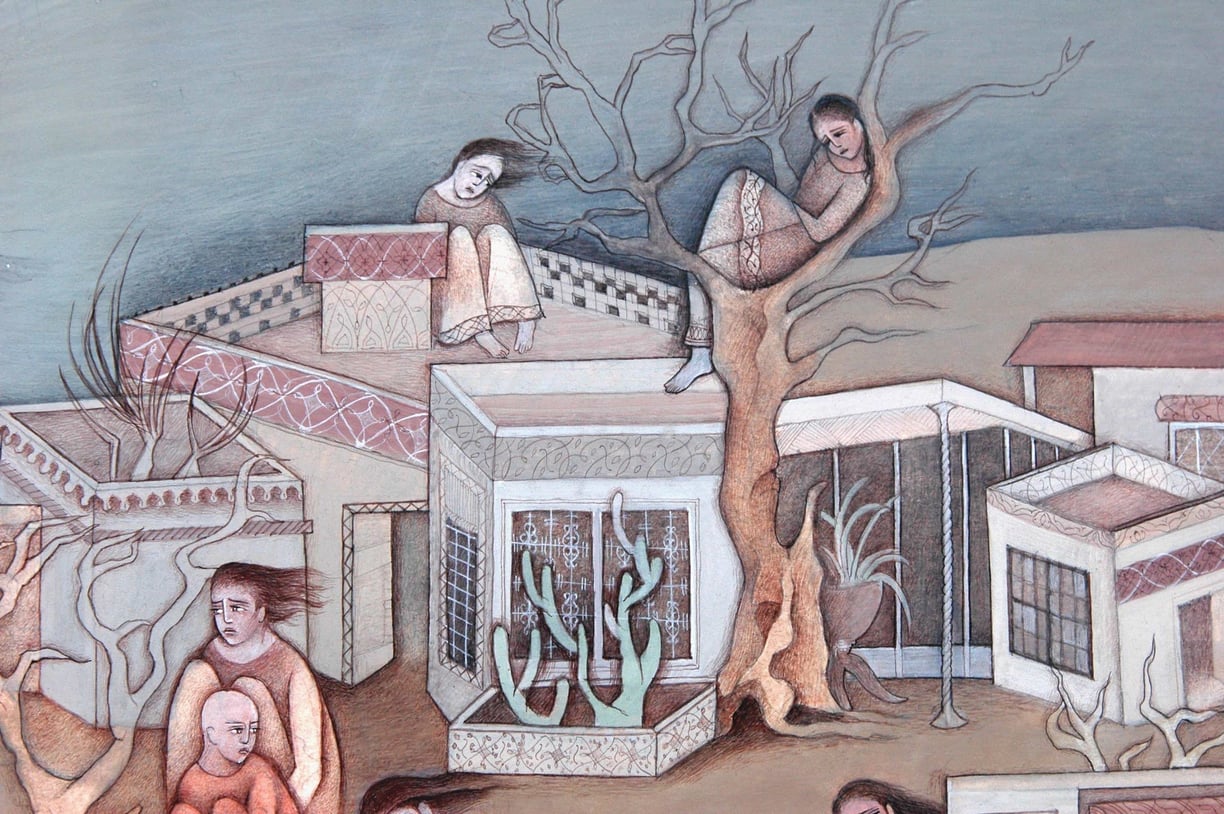
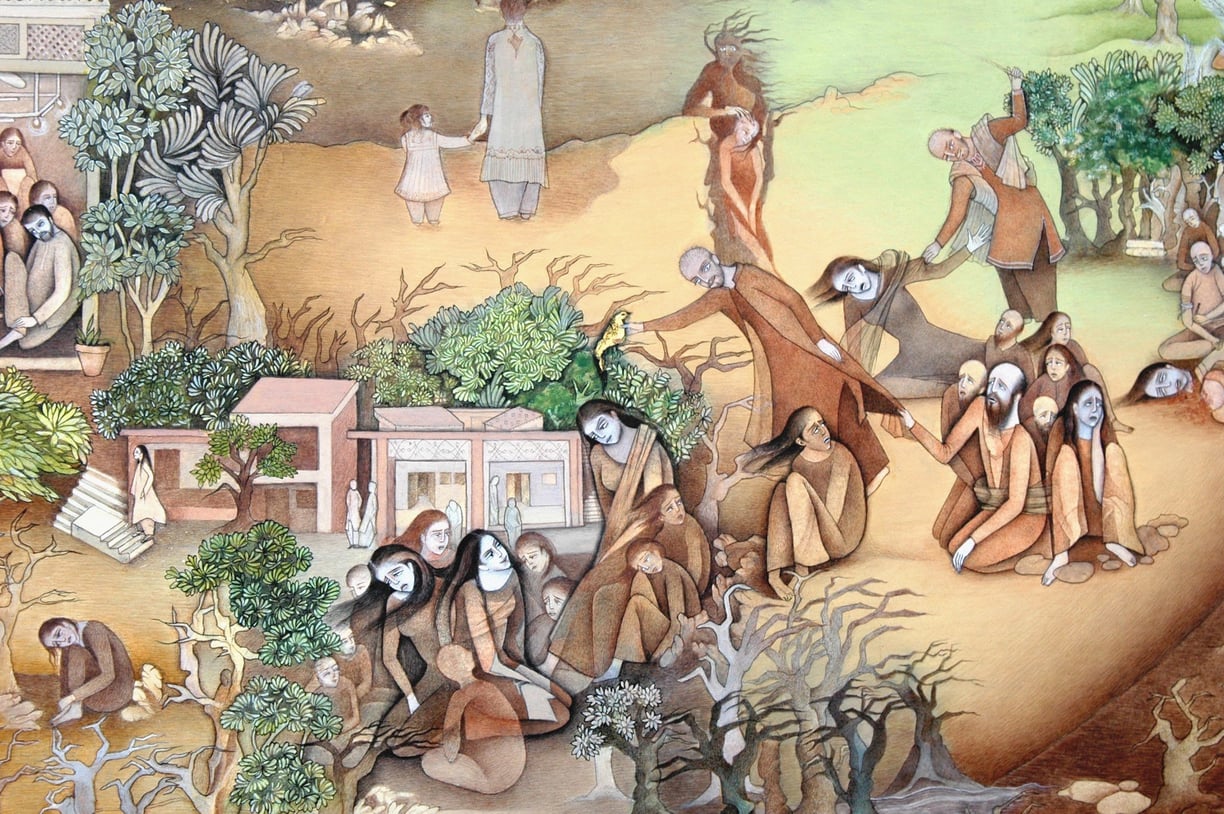
From within the garden the self looks up and out and sees, for the first time, how much is wrong in the world around her. A maulvi in corruption. The shadow of child abuse. She does not suffer these things. She witnesses them · and the witnessing is what splits her.
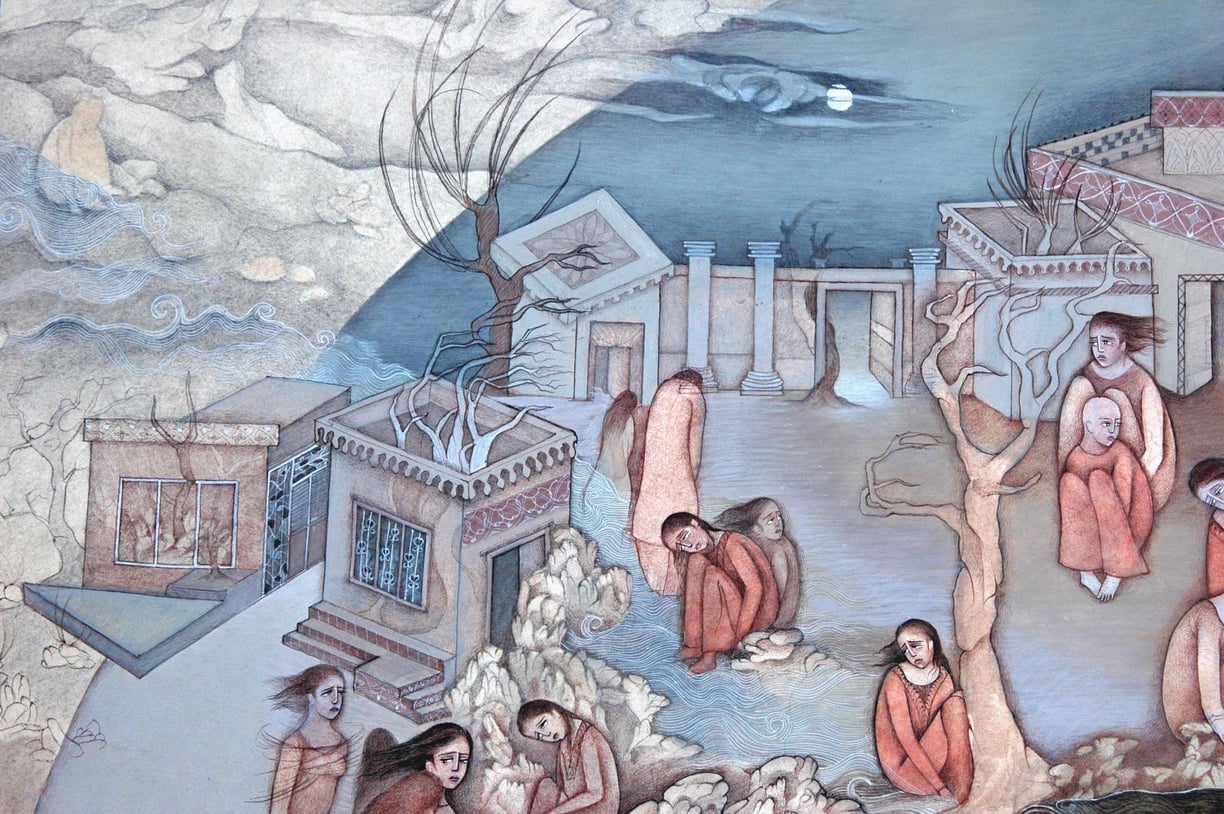
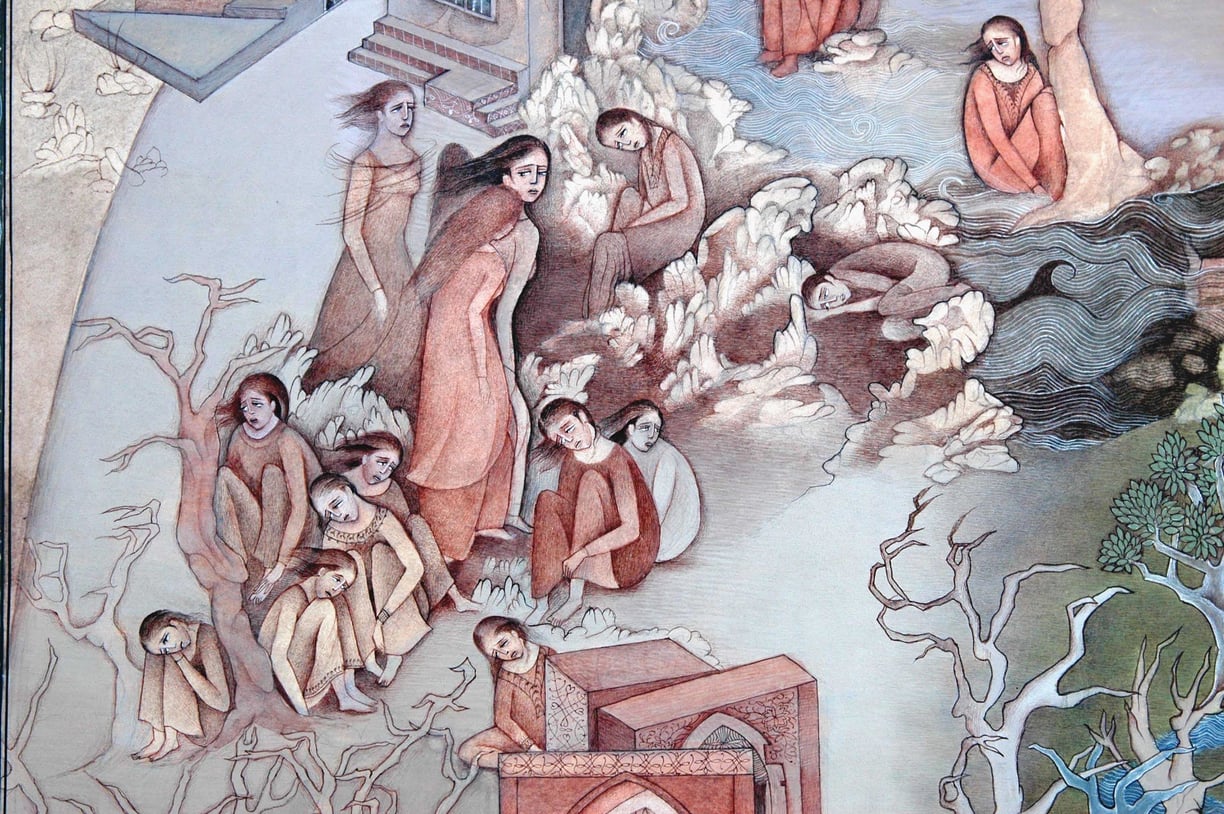
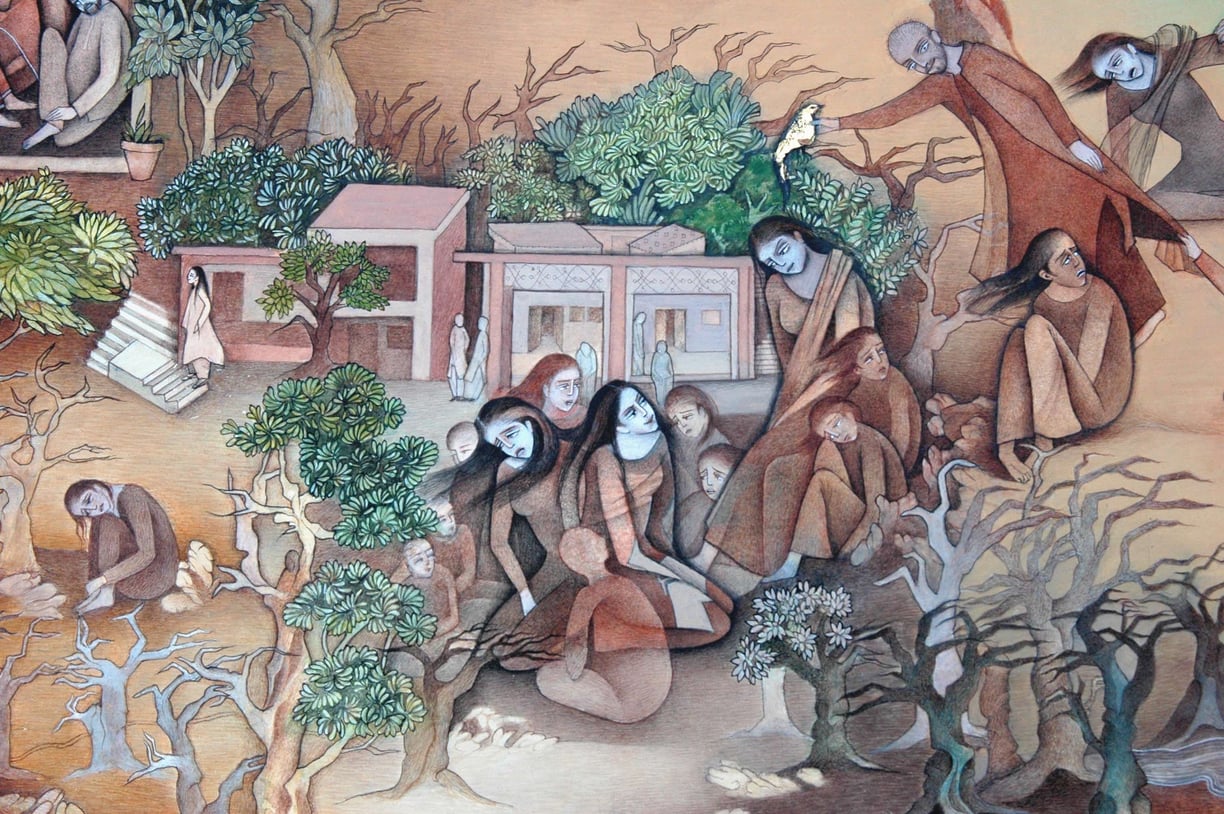
From this point a happy self and a sad self move through the same scenes at once, neither cancelling the other out. Present among them is the transparent figure of the onlooker · the artist watching herself.
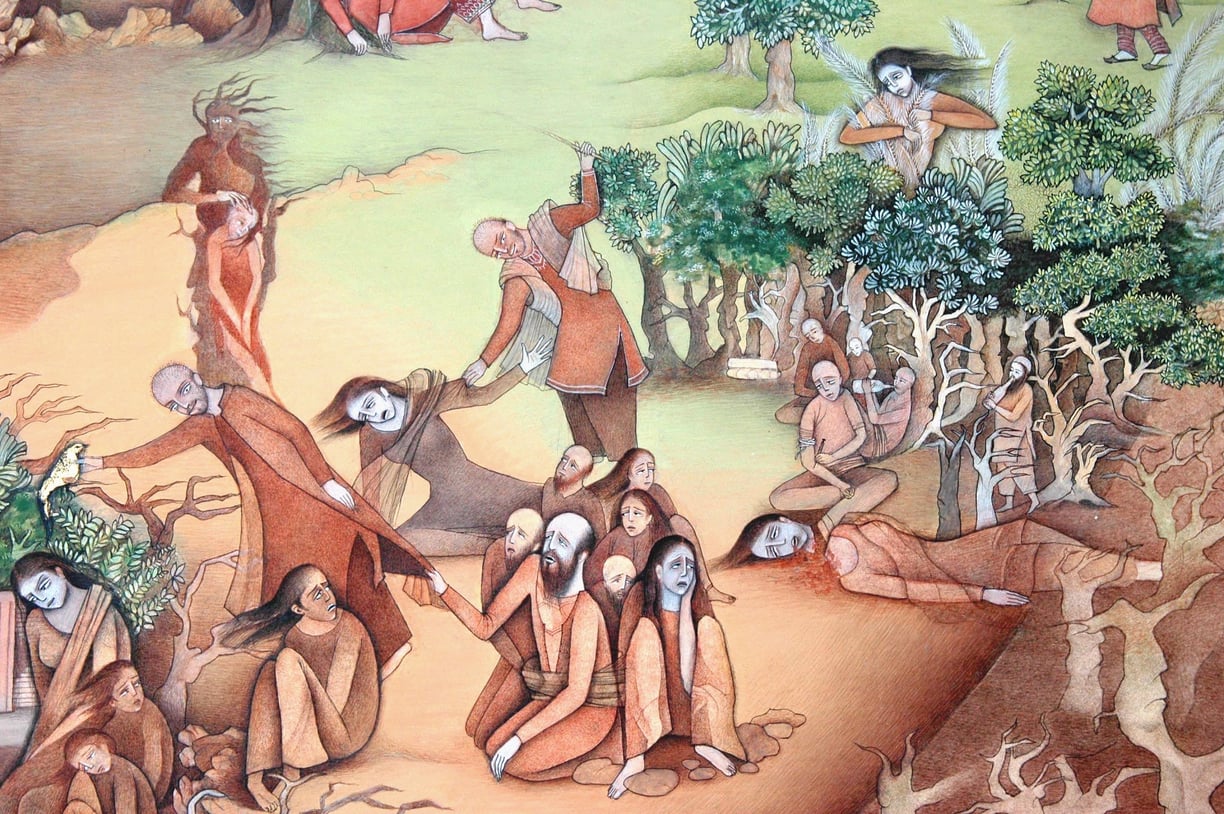
The pursuit of the gold bird · that ancient miniature symbol of desire and its thwarting. Elders pulling the young back from ambition. The spiral continues through the upper left, where the mixed feelings of childhood refuse to resolve.
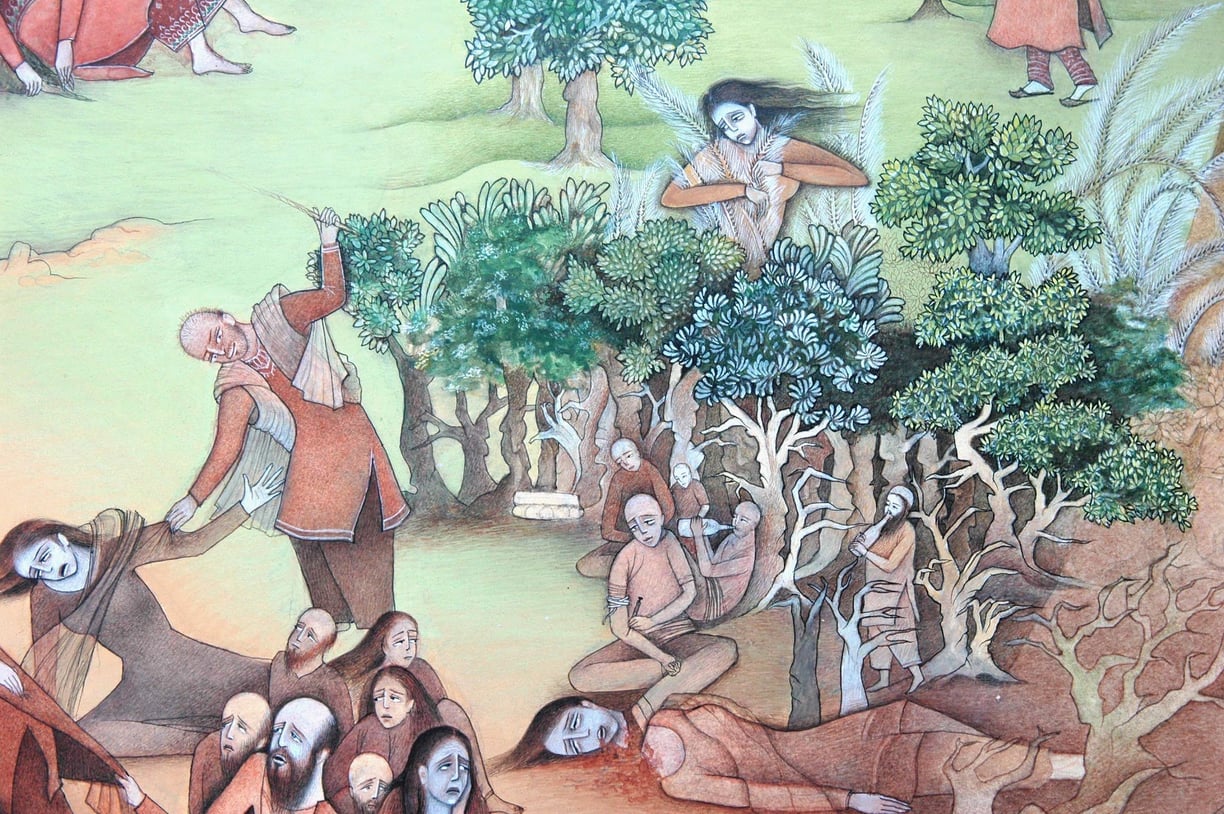
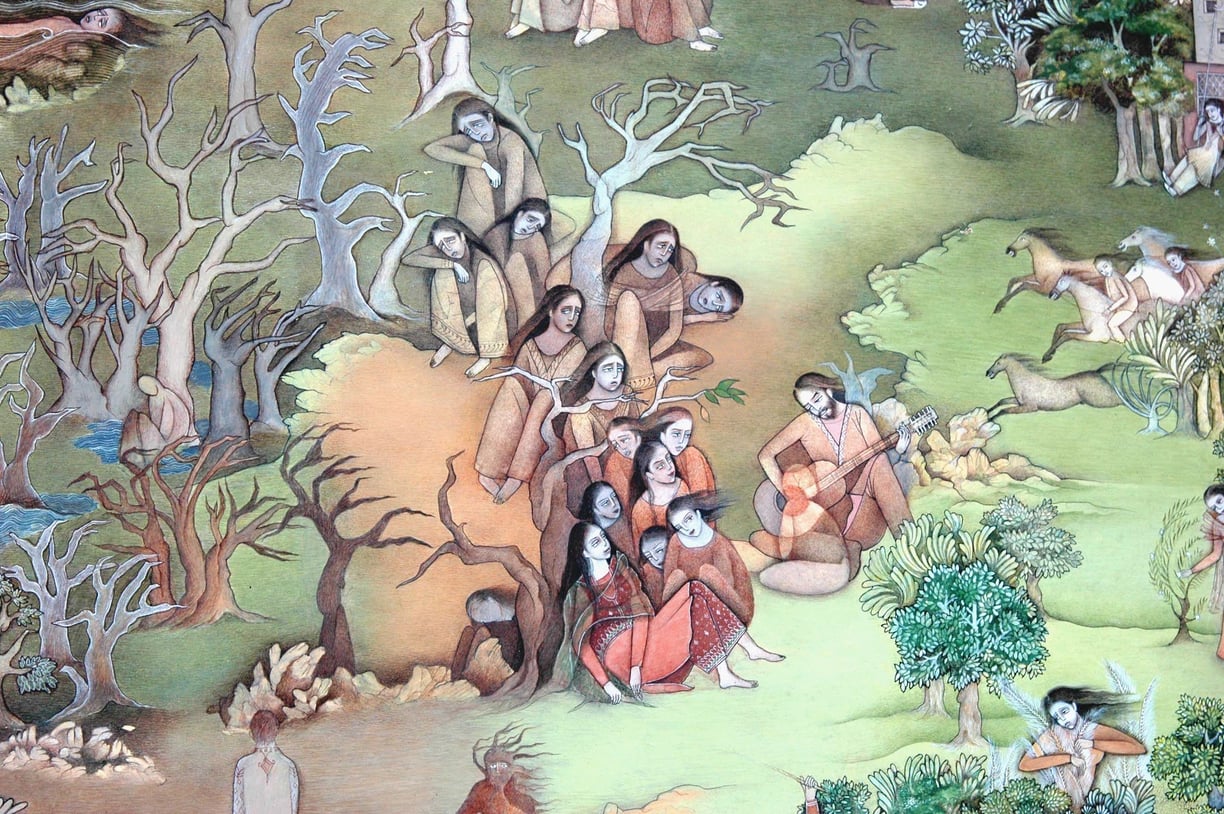
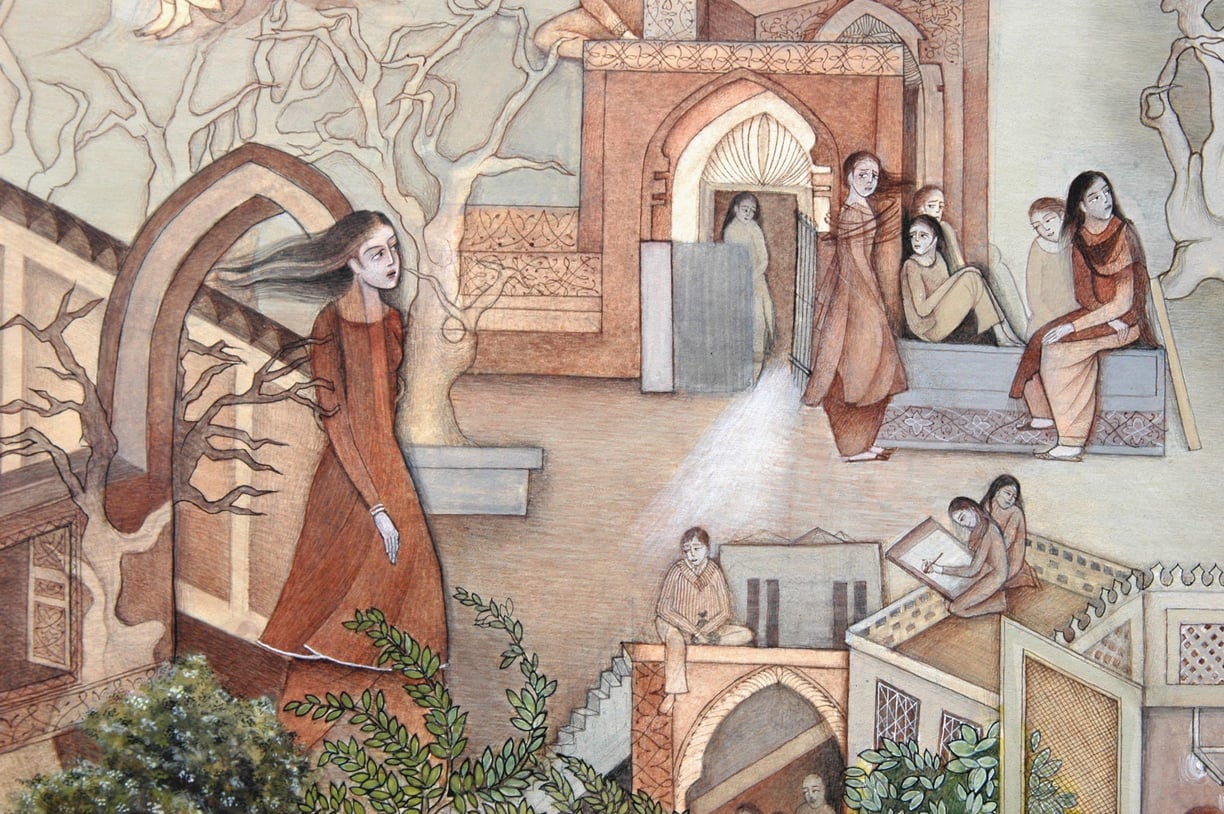
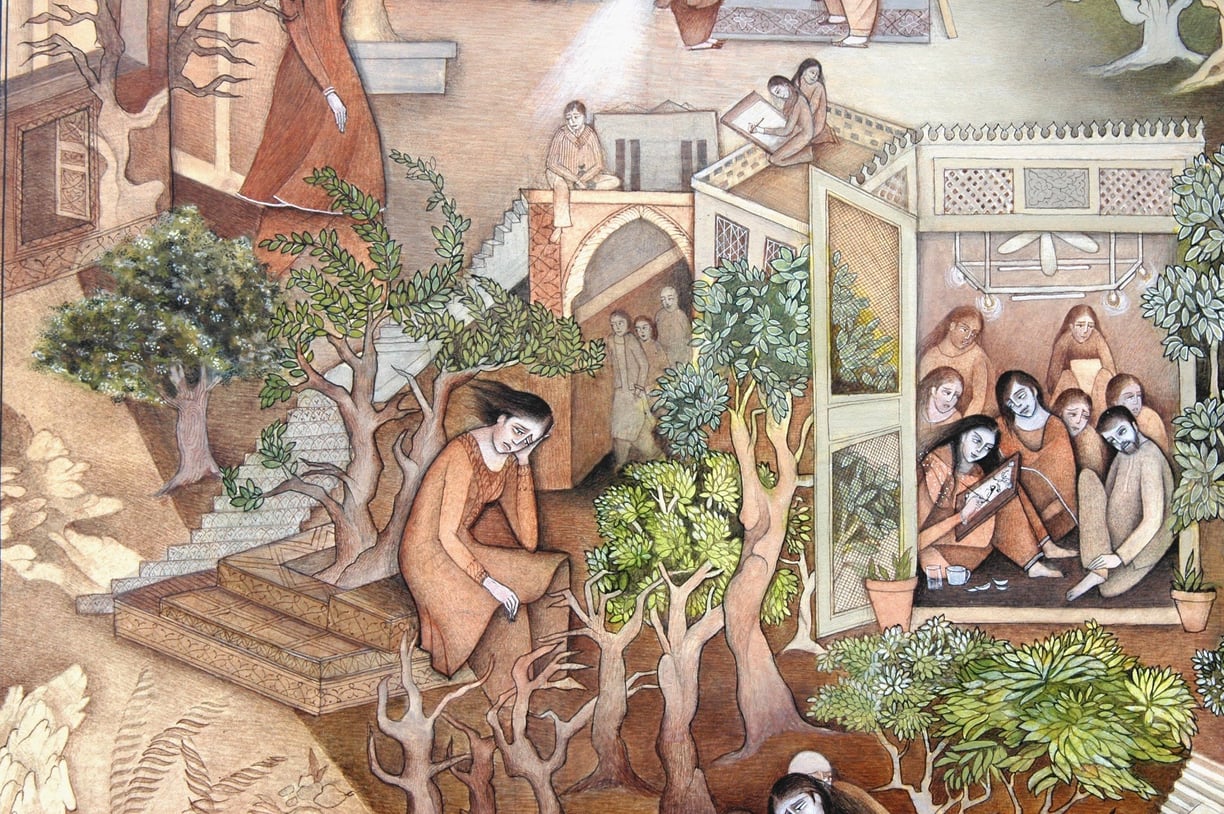
The figures who shaped the painter's hand and eye: an art teacher from school, the studio of Ustad Bashir Ahmed at the NCA · the transmission of the very technique used to paint this memory of its transmission.
Munibahnama is executed in gouache and gold on hand-prepared wasli, in the full classical Indo-Persian miniature tradition. The palette is warm and earthen · ochre, terracotta, dusty green, the grey of bare trees · deliberately unglamourised, the colours of memory rather than of court splendour. Gold appears not as dominance but as punctuation: the gold bird of desire, the gilded moments of beauty within a life that was not, overall, gilded.
The compositional form · the mandala within a hashiya, figures inhabiting a continuous landscape without perspective illusion · is entirely faithful to the classical tradition. Yet the subject it carries has never been carried this way before. In the Mughal atelier, the nama was a royal commission. Here, the artist is both patron and subject · the first time, perhaps, that the form has been used to document not what a ruler saw from the outside, but what a woman carried within.
The hashiya · the border · is not ornament. It is the painter's sad self, designed into a repeating motif of solitary figures: hunched, blue-tinted, each one alone. The border does not frame the painting from the outside. It participates in it · the self watching the self, the witness who cannot enter and cannot look away.
Munibahnama stands at the centre of a practice executed entirely in the classical miniature technique, and built around a single fundamental question: what does it mean to be a human being, contained in the world as it is, and reaching toward something beyond it? Here, that question turns inward. The self is mapped · present, honest, and finally witnessed. By the artist herself, for the first time, in the oldest language she knows.