Works Across Traditions
Paintings that sit outside the named series · formal exercises, studies made in dialogue with earlier masters, and personal works that found their own subject independently. Together they trace the range of an artist equally at home in the Mughal court, the Safavid garden, and the private lyric.
Aghas
The first original painting completed during undergraduate studies at the National College of Arts · a formal portrait study in the mode of the Mughal court. The figure placed against a plain ground, the face rendered with the particular attention reserved for sitters of rank. The painting holds to the economy of means that distinguishes the court miniature from the decorative: nothing in the field that does not serve the presence of the subject.
 Aghas
Aghas
Shikar
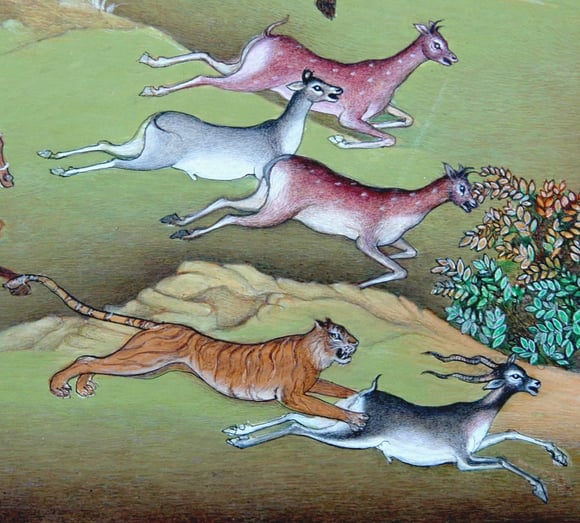
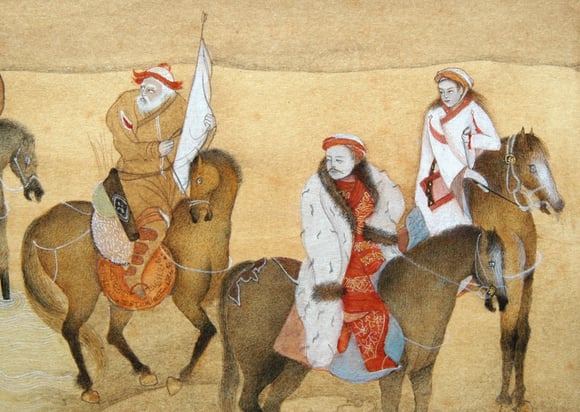
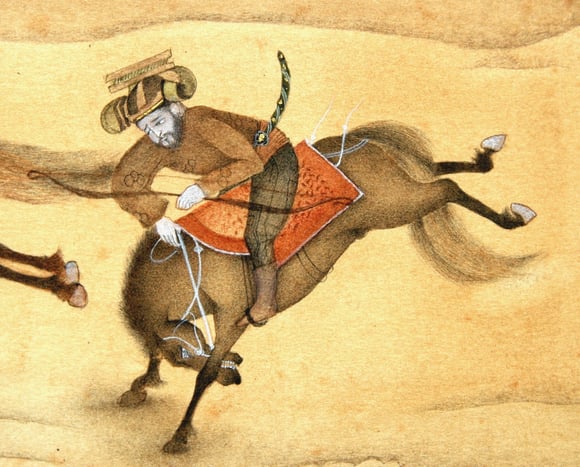
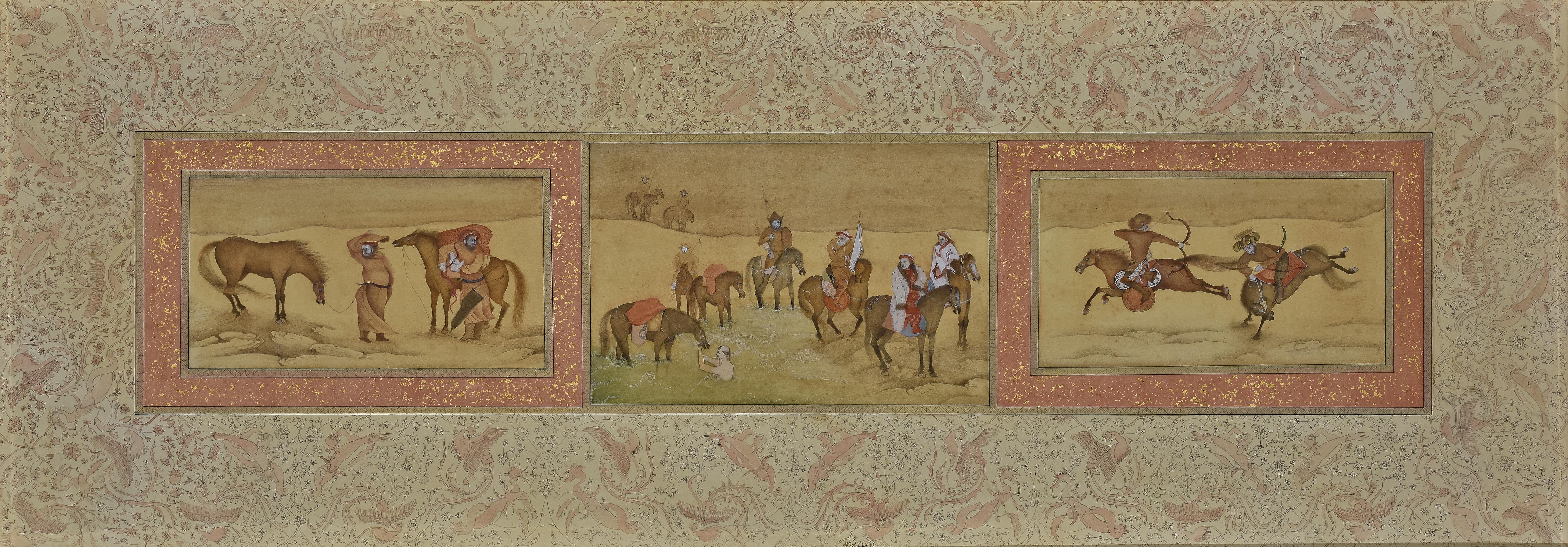
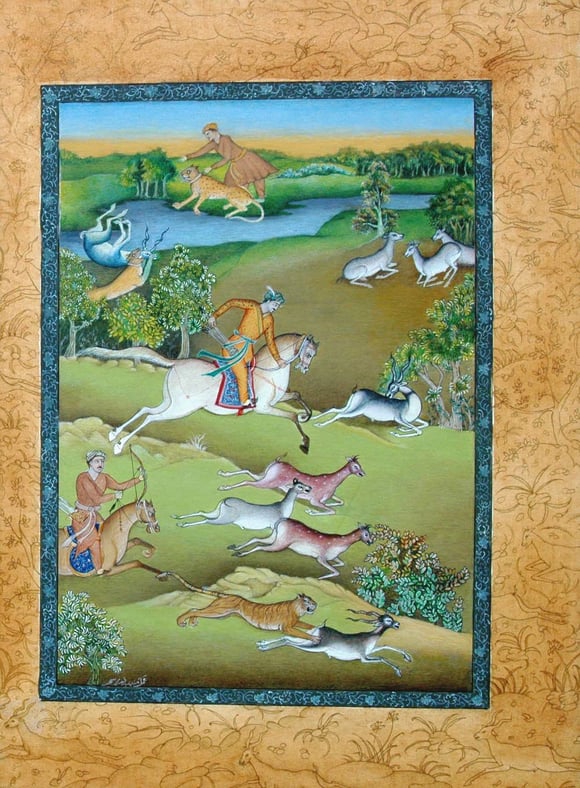
A recomposition drawn from several Mughal hunting paintings · the shikar, or hunt, a recurring subject in the imperial ateliers of Akbar and Jahangir, where the display of sovereign power and the drama of the chase were rendered with the same scrupulous attention. Here the sources are synthesised into a single composition, the painter's act of assembly itself a form of deep engagement with the tradition.
Persian
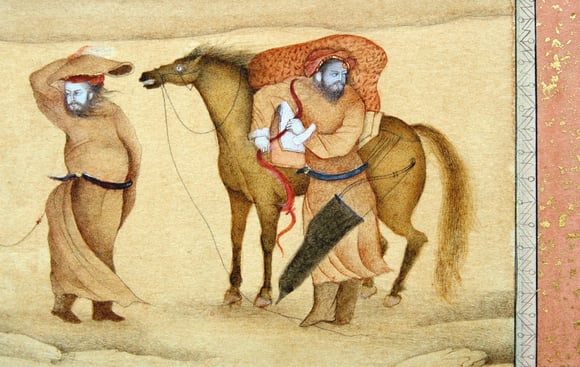
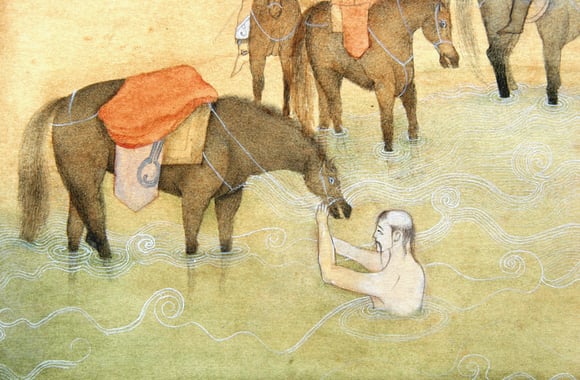
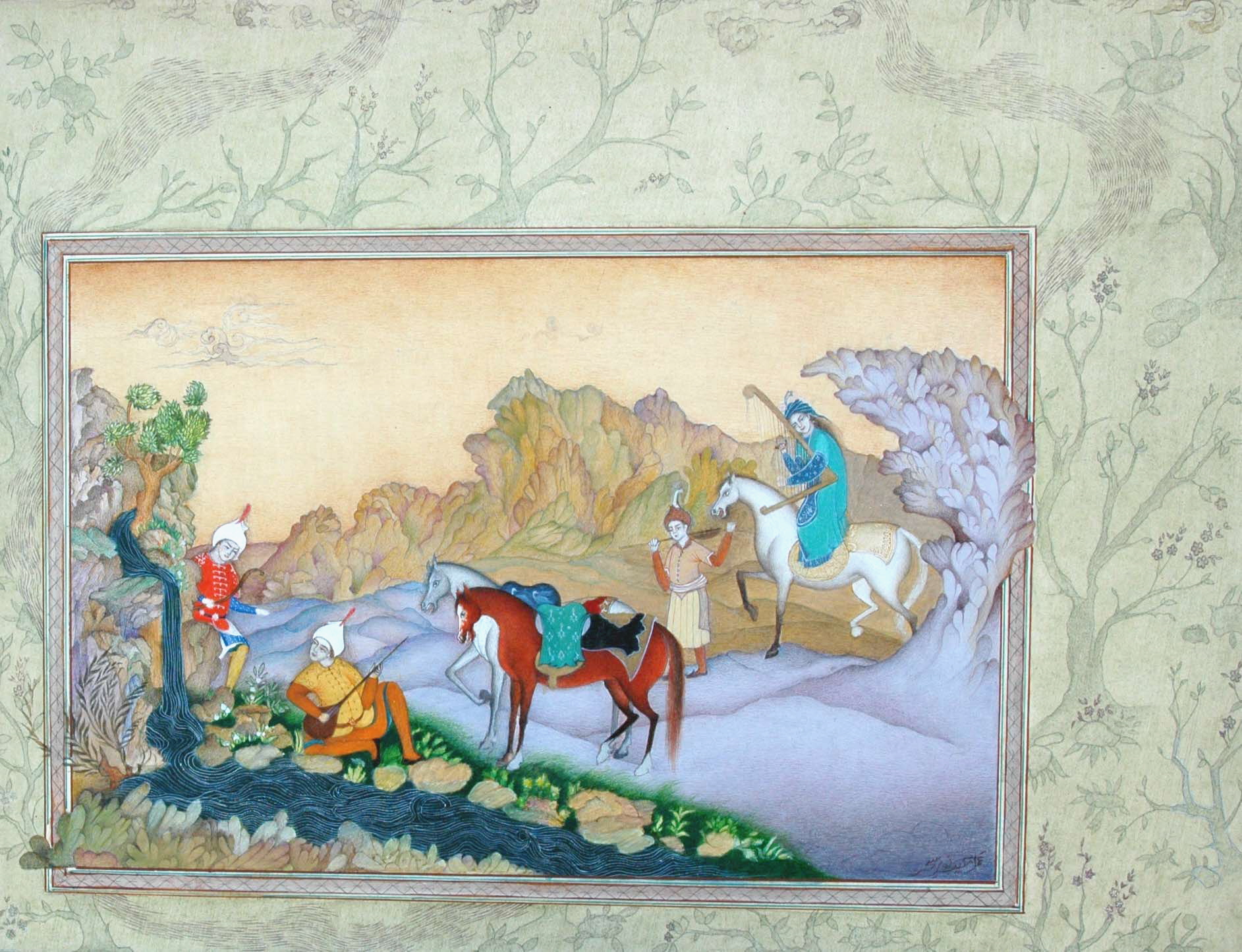
A recomposition drawn from several Persian works · the Safavid tradition's flattened picture plane, the high horizon, figures set in idealised landscapes of gold and lapis. Rather than copying a single model, the painting synthesises sources within the grammar of the Persian manuscript page: an exercise in how colour, line weight, and spatial compression produce an image simultaneously decorative and devotional.
 After Chughtai
Chughtai
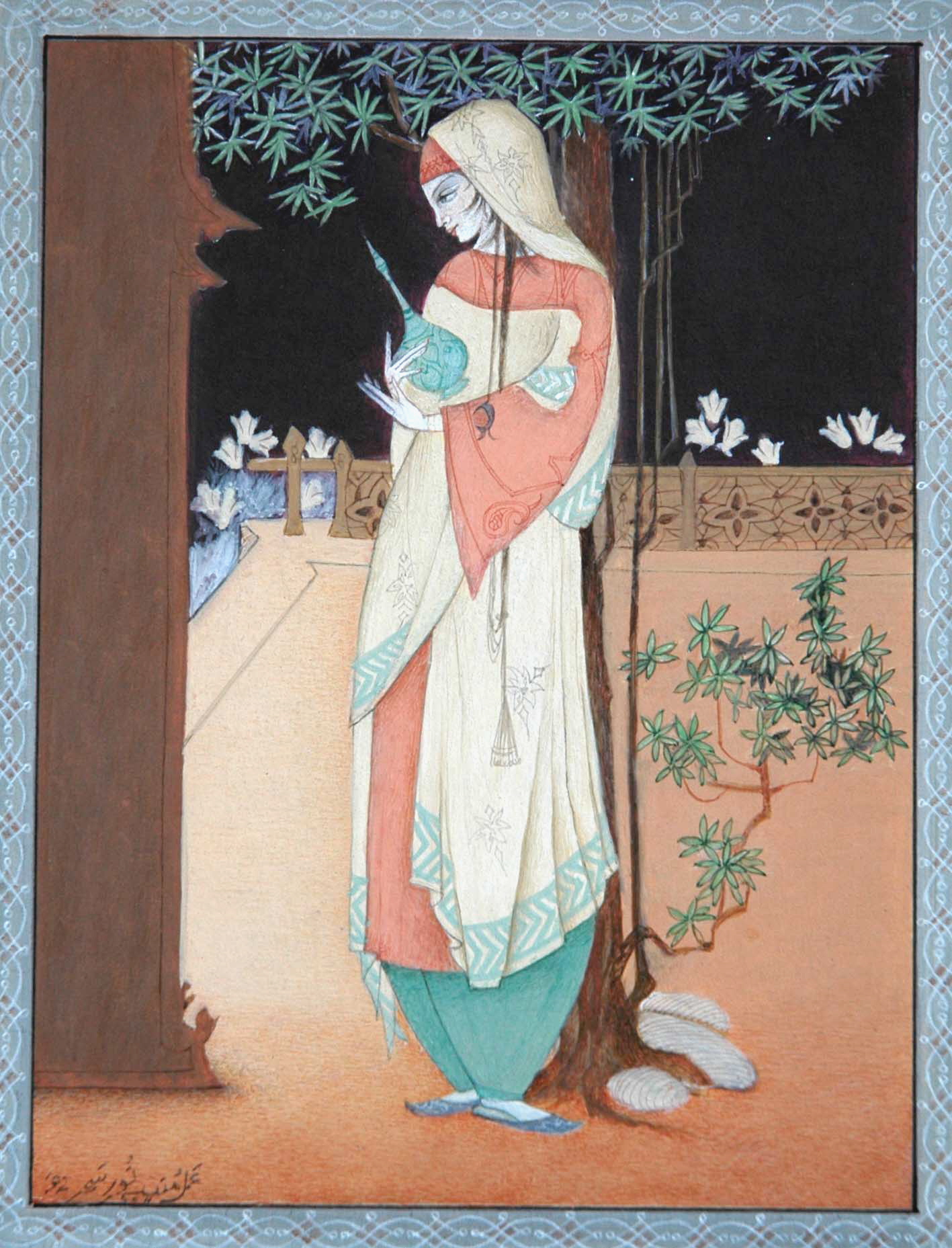
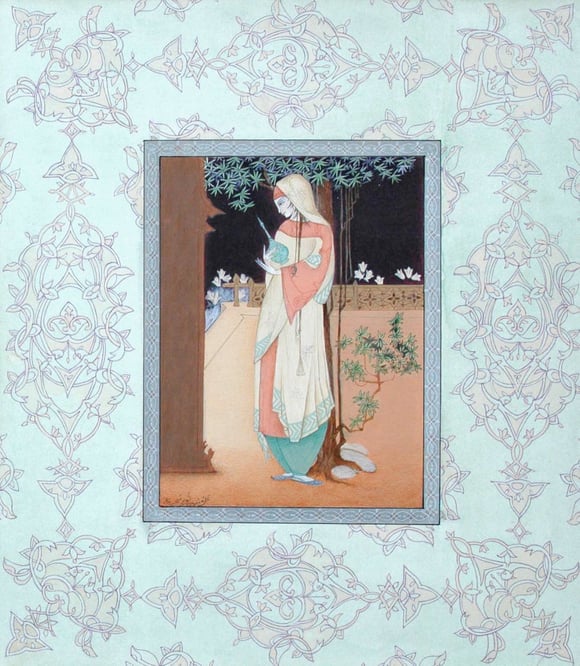
An engagement with the great Lahori painter of the early twentieth century · his characteristic lyricism: the flowing line, jewel-flat colour laid without modelling, and a decorative sensibility that places the figure always within an enveloping ornamental world. To paint after Chughtai is to contend with an idiom that has already resolved many of the tensions between traditional form and modern sentiment.
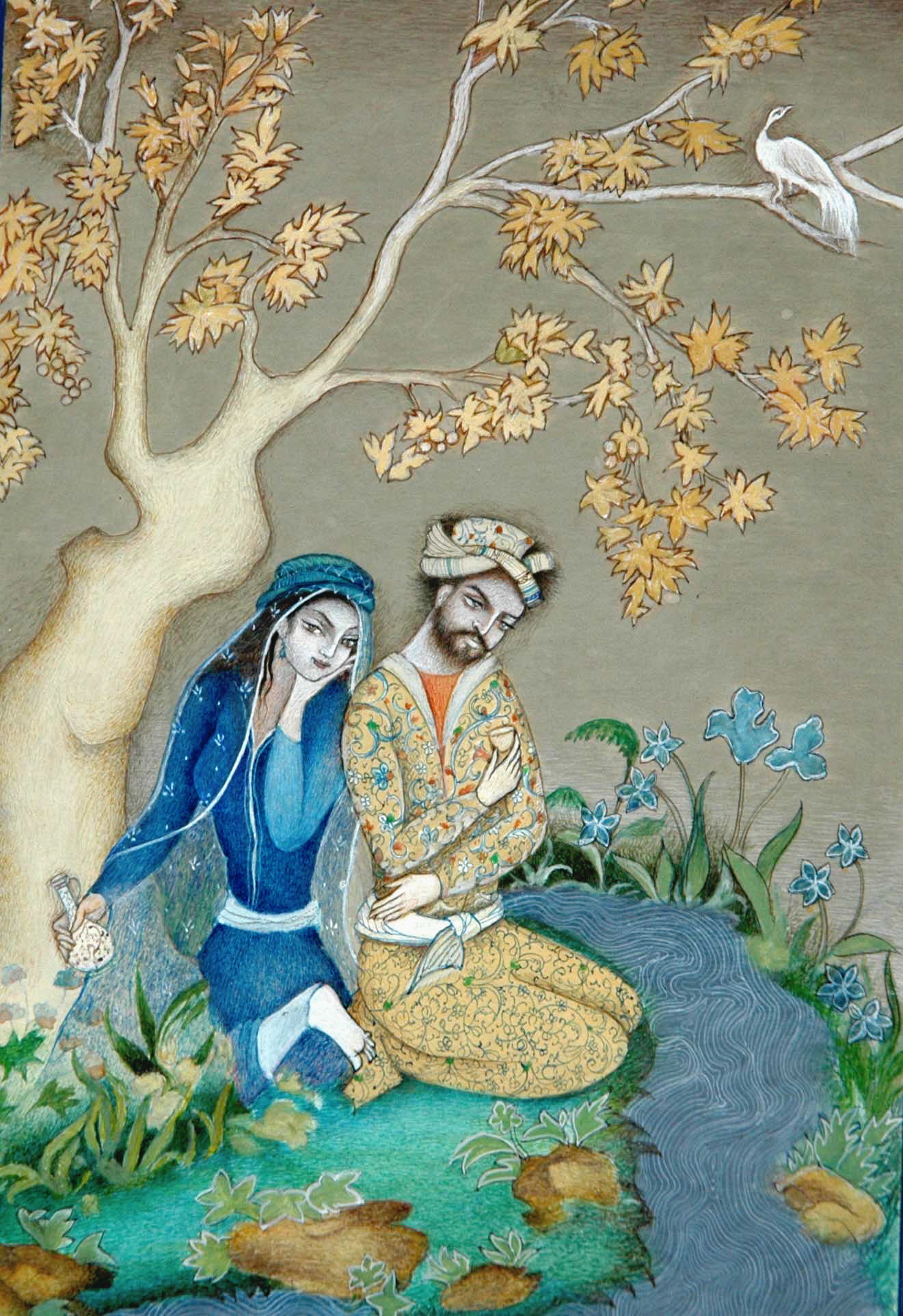
Lovers
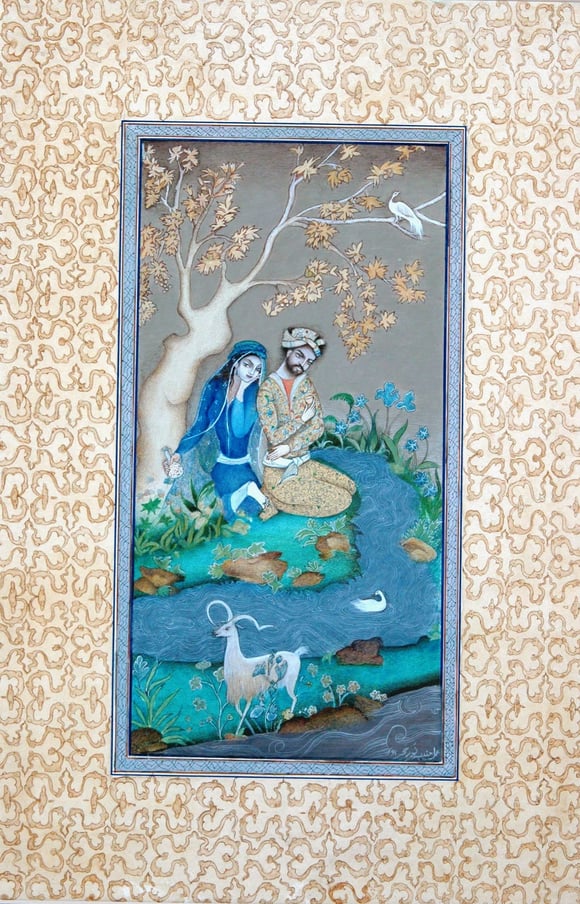
Two figures in the proximity of tenderness. The painting attends to the particular · the turn of cloth, the weight of nearness, the way two figures share the same painted air. In the miniature tradition, the encounter between lovers carries the allegorical charge of the soul's longing for union, the outward form always pointing toward the inward state.
 Lovers
Mor
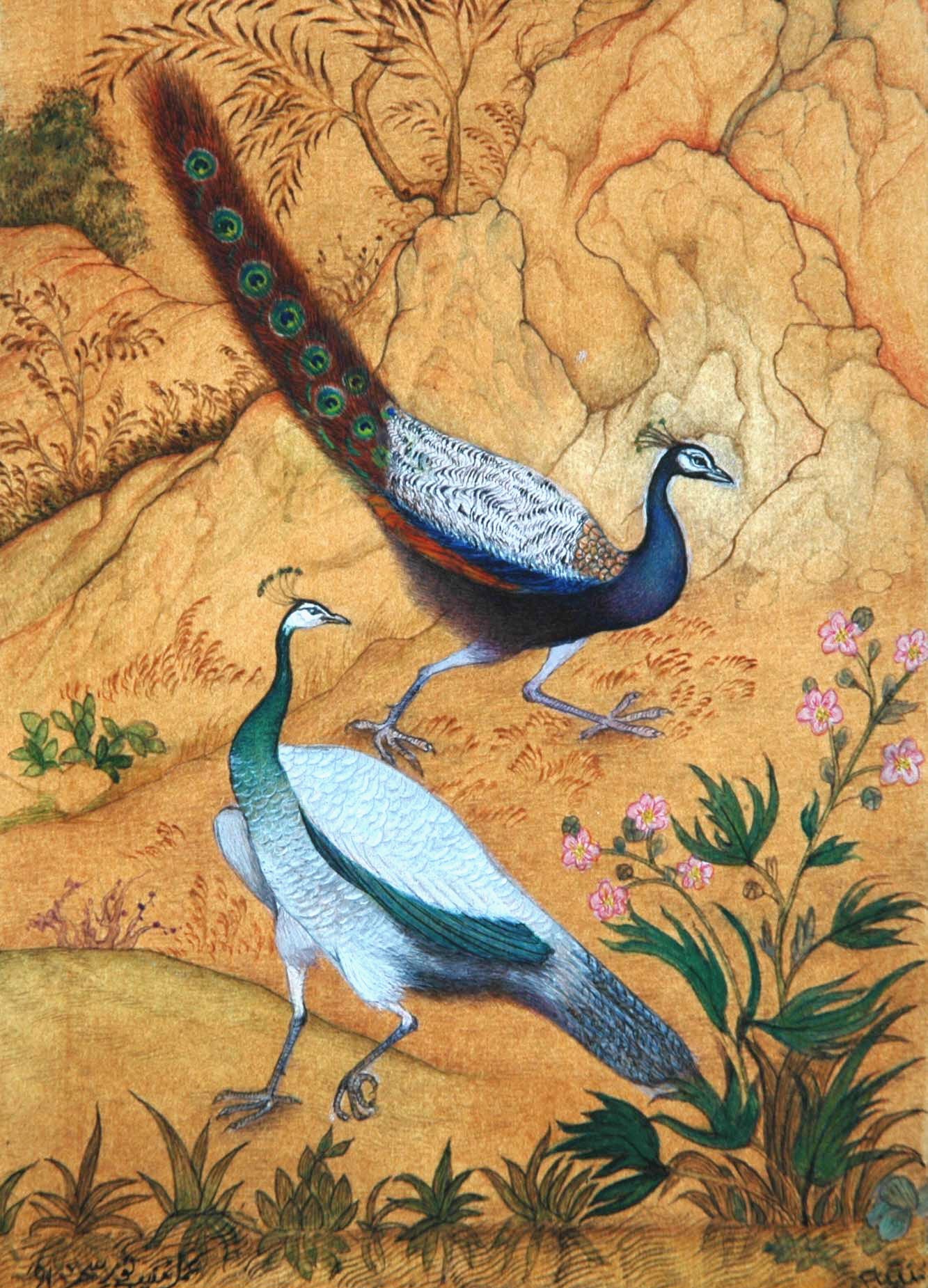
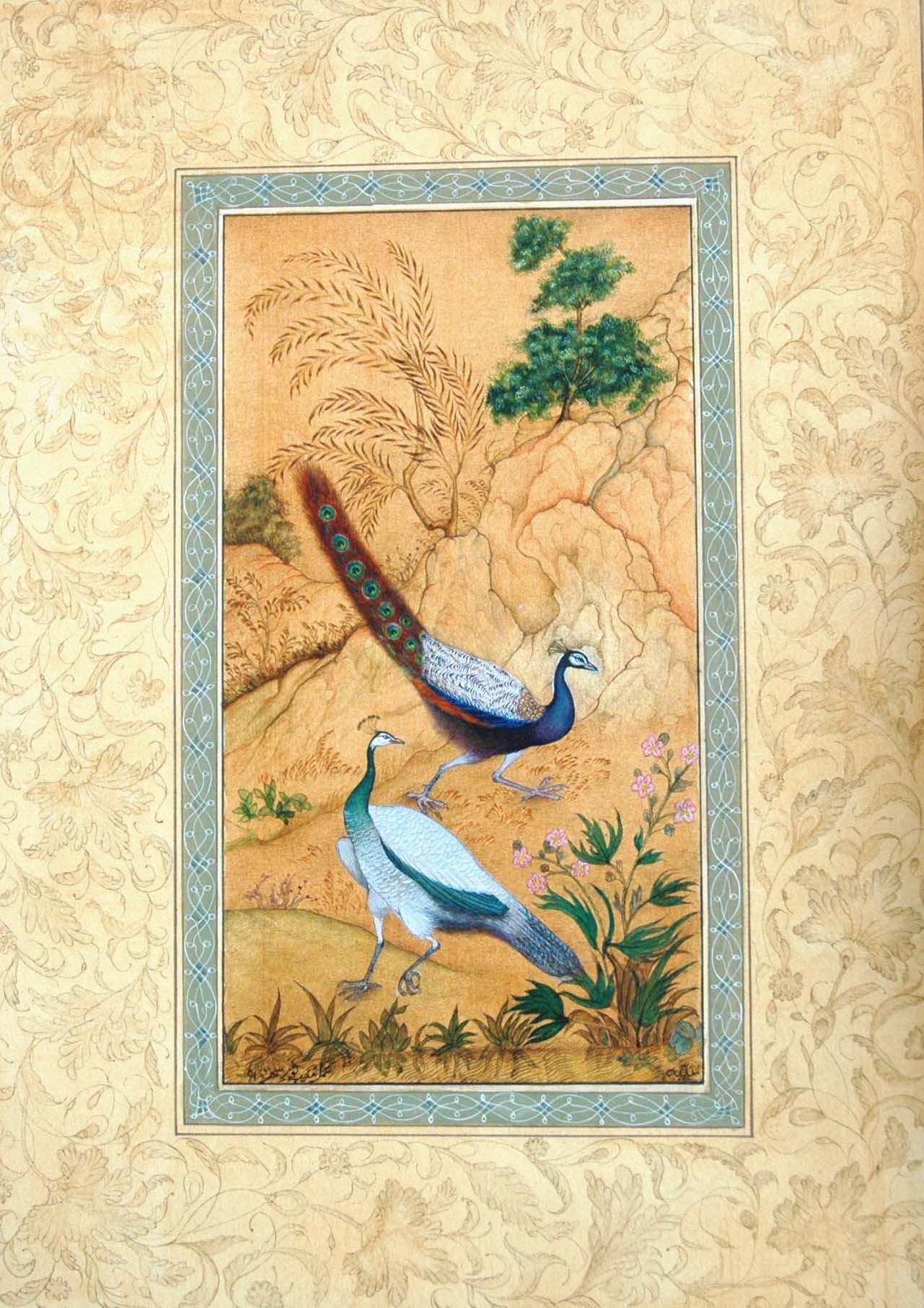
The peacock carries divine light in its eye-feathers · a recurring symbol across Indo-Persian painting for beauty that is also a kind of vigil. In Urdu, mor names the bird; in the vocabulary of the miniature it is the creature most closely identified with the garden of paradise.
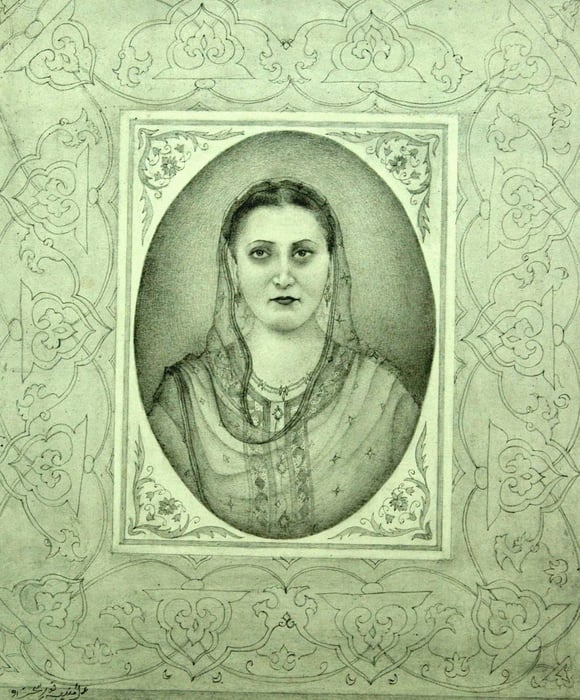
My Grandmother
 Young Boy Sitting
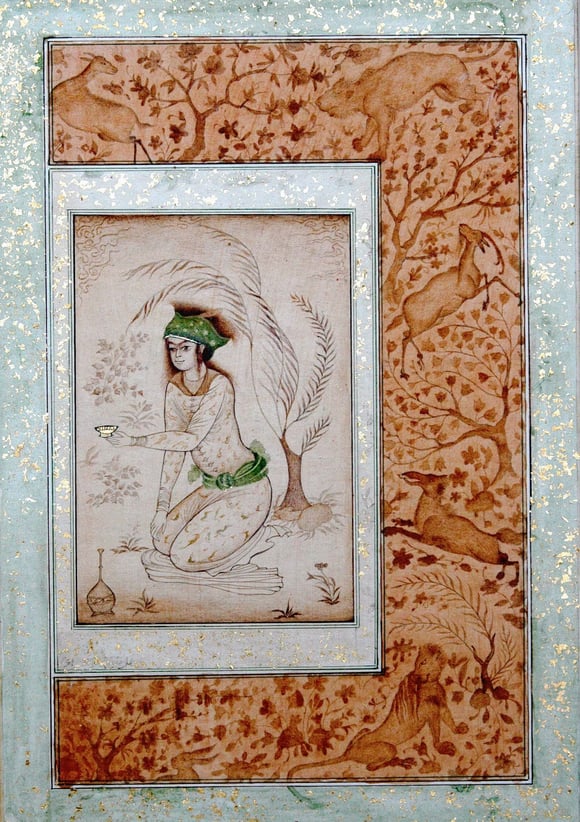
Young Boy Sitting
An independent figure study in neem rang · the natural earth and stone pigments of the traditional palette · heightened with gold. The palette is rooted in the Indo-Persian manuscript tradition, where mineral colours ground from lapis, ochre, and malachite carry both optical and symbolic weight. The quiet pose holds the attention of the miniaturist: stillness as a subject in itself.
 Rumi
Rumi
Rumi
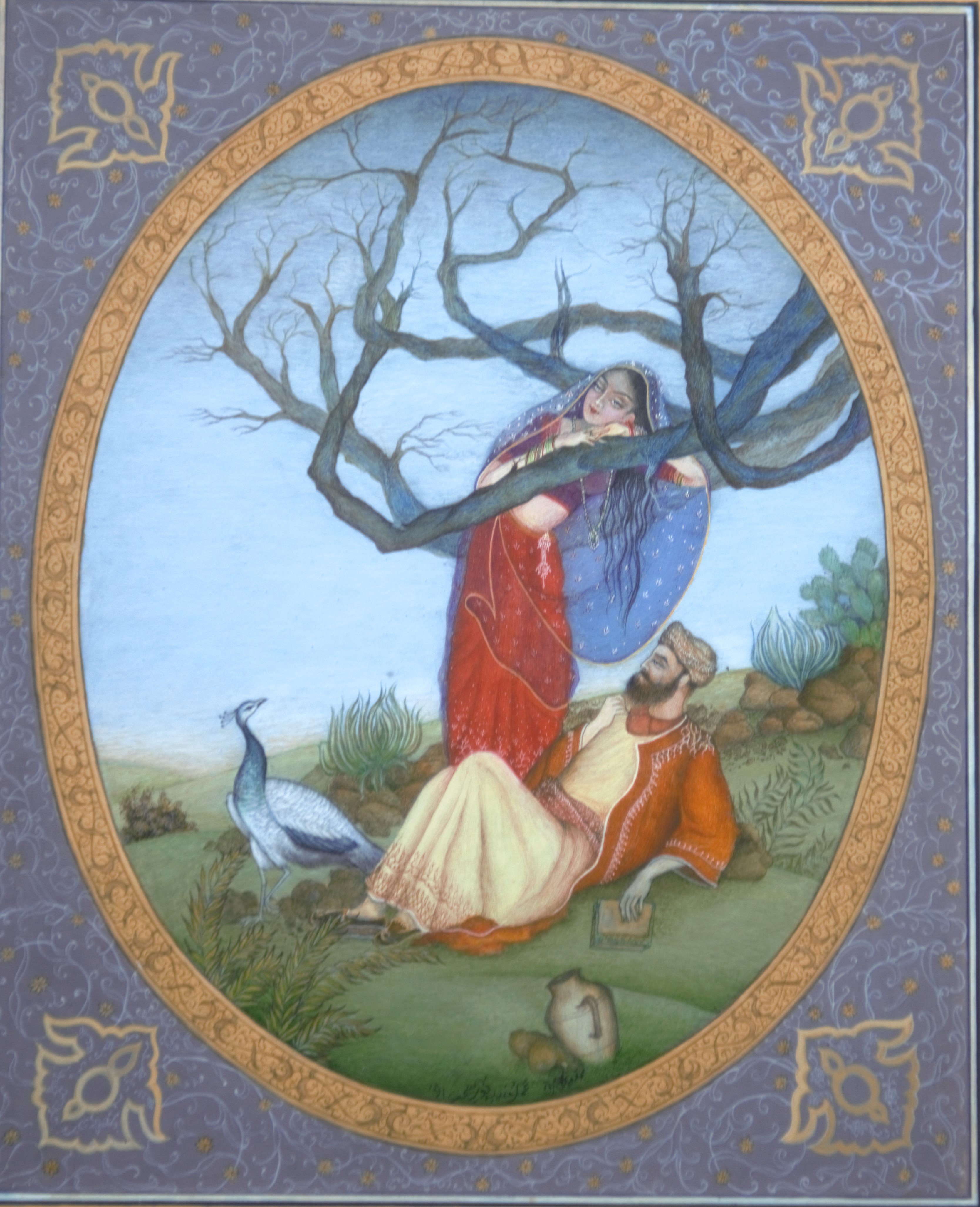
A conversion of Edmund Dulac's illustration of Rumi's poetry into the language of the miniature painting. Dulac's book illustration is transposed into the Indo-Persian idiom · the same longing, the same figure at the edge of what cannot be reached, but now rendered in gouache and gold, within the flattened spatial logic of the manuscript page. The reed still calls to the reed bed; only the medium has changed.
Going For Water
An early work from the year of graduation · the figure in landscape, the act of daily necessity rendered with the formal attention of the miniaturist. The year 1991 places it at the moment of formation, under Ustad Bashir Ahmed at the National College of Arts, Lahore, in the final years of rigorous traditional training before the later series found their subjects.
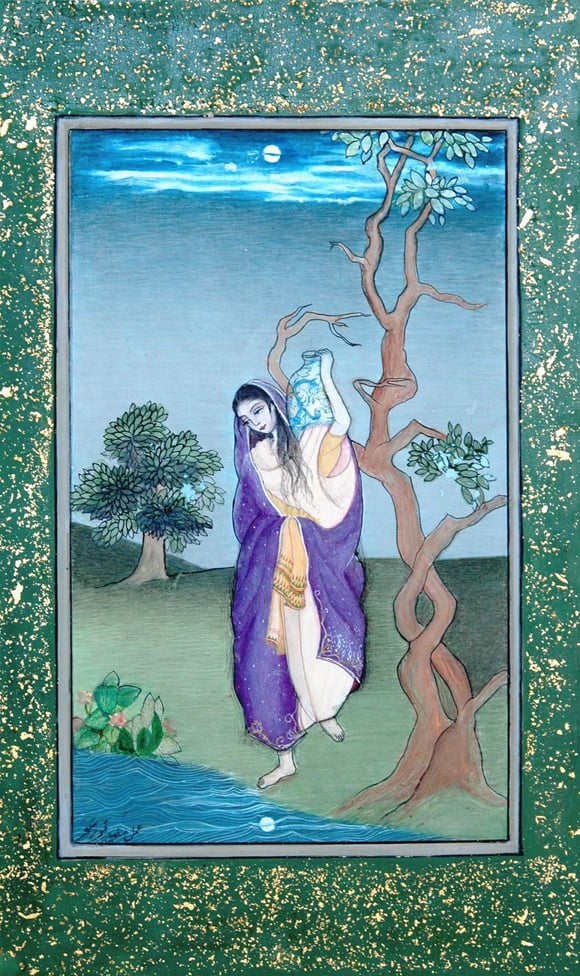 Going For Water · 1991
 Dahte Tanhaaee
Dahte Tanhaaee
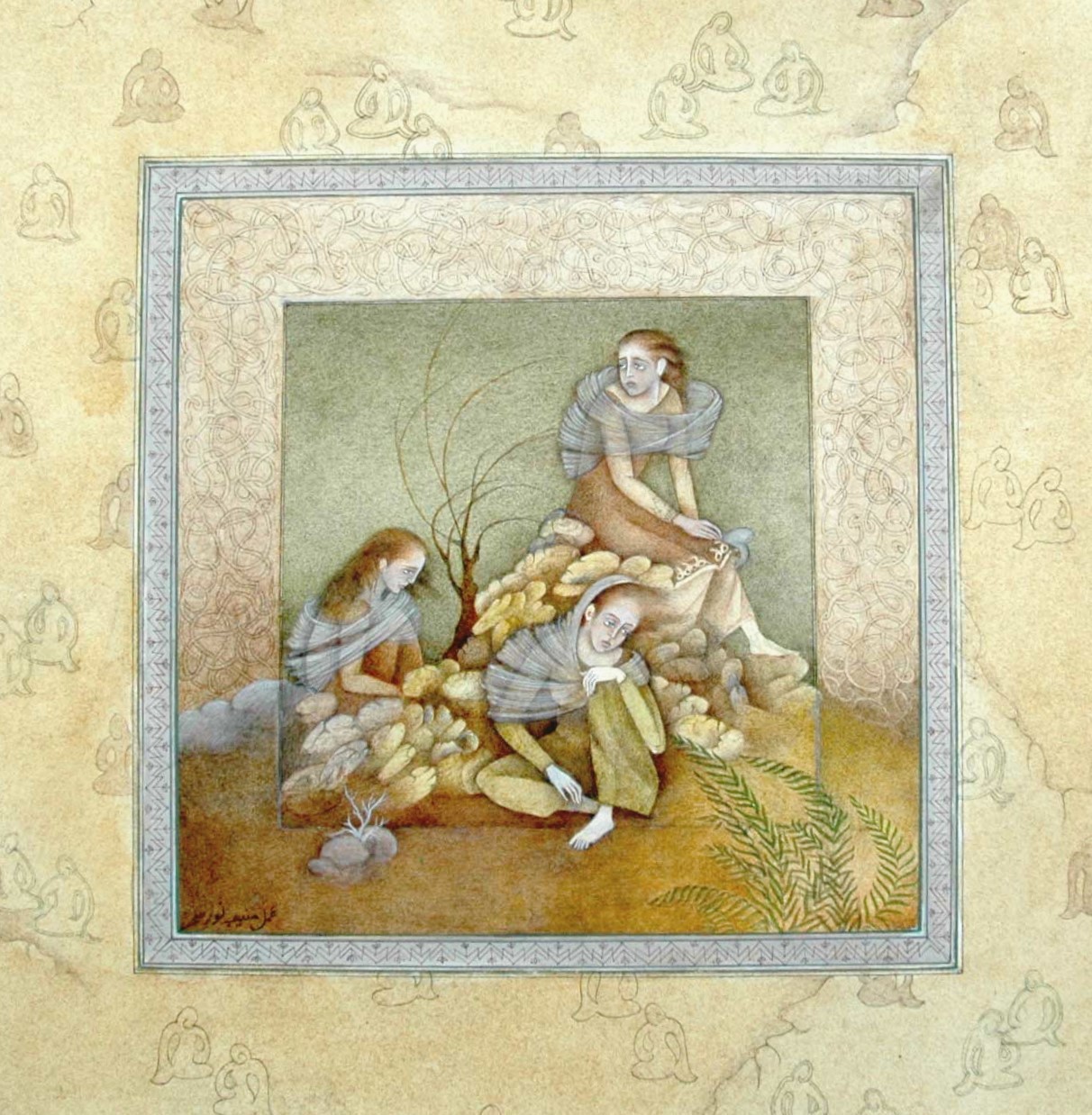
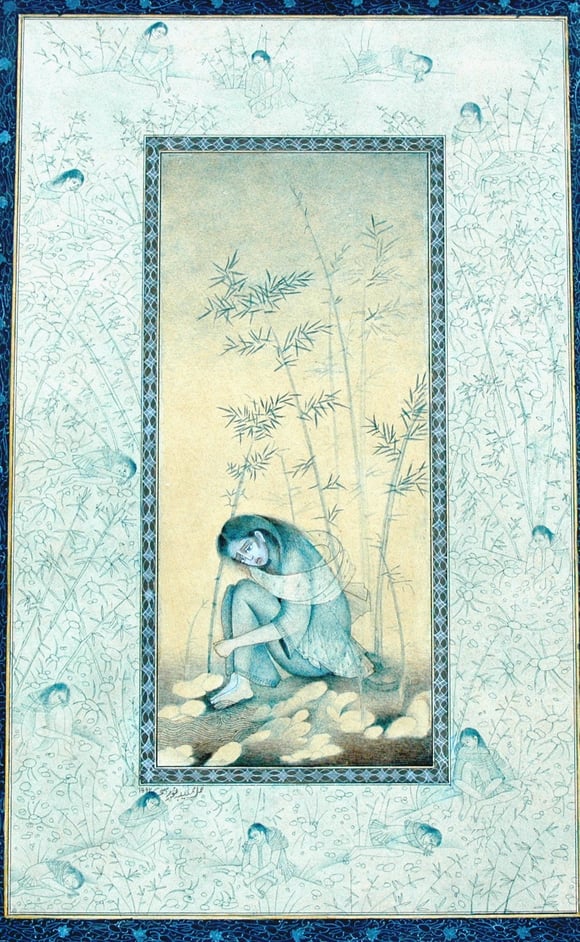
Dahte Tanhaaee · the plain of solitude · names a landscape that is also a state of mind: the flat open desert of aloneness, without shelter and without end. The painting renders this interior topography in the miniaturist's language, where landscape is never merely scenery but always the condition of the figure within it.
In the Garden
A pencil study · the enclosed garden as a condition of shelter, the figure moving through it without urgency. Rendered without colour or gold, the drawing records the compositional logic of the garden miniature before the illumination begins.
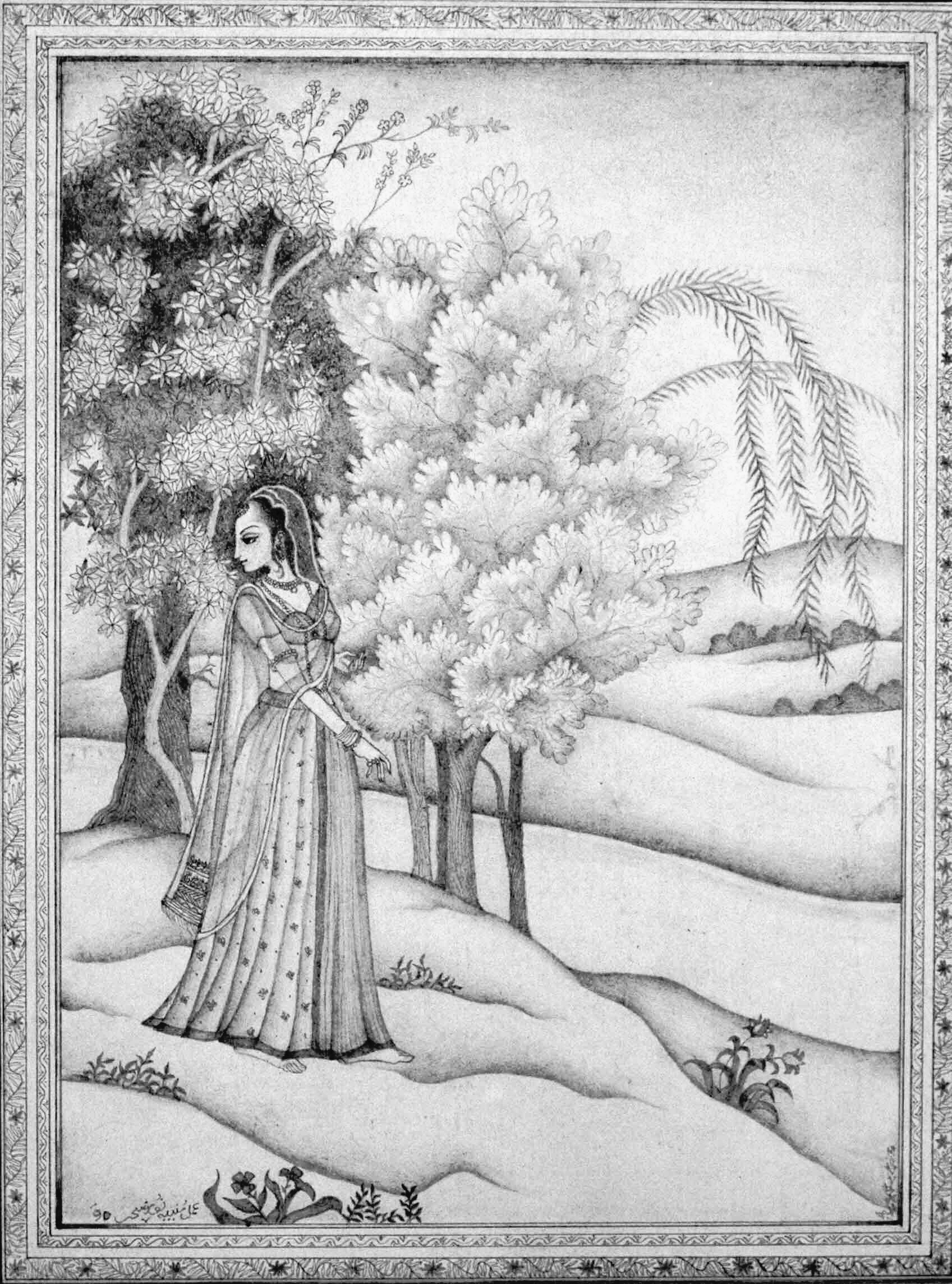 In the Garden · Pencil
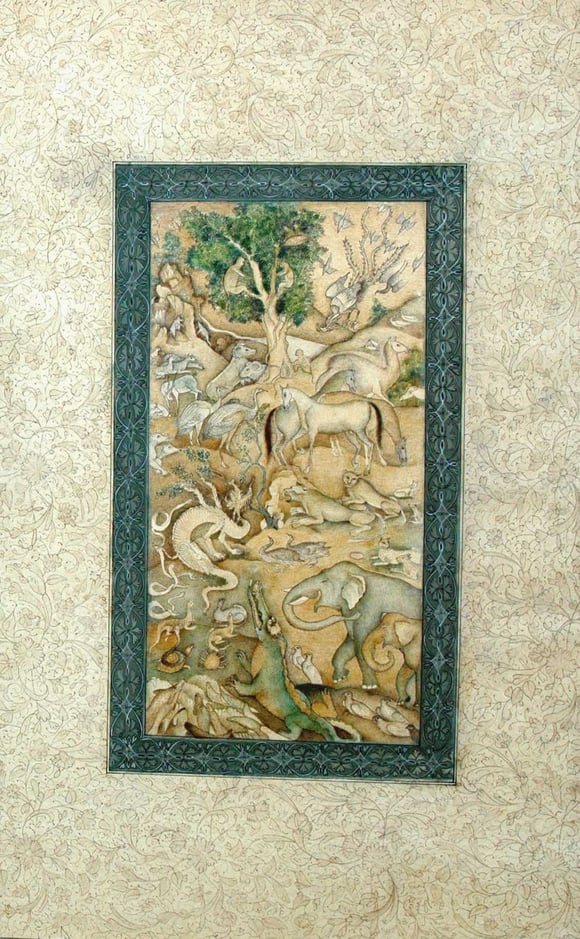
100 Animals and Birds
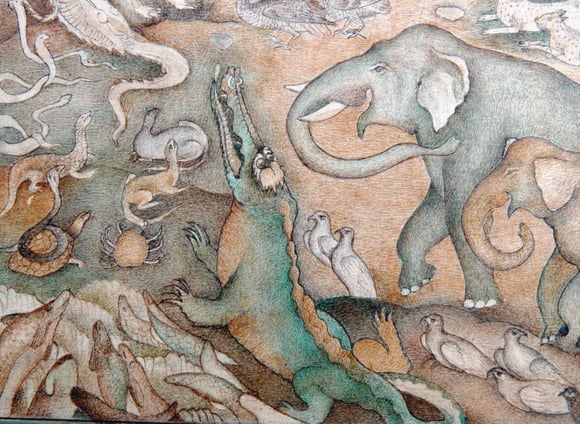
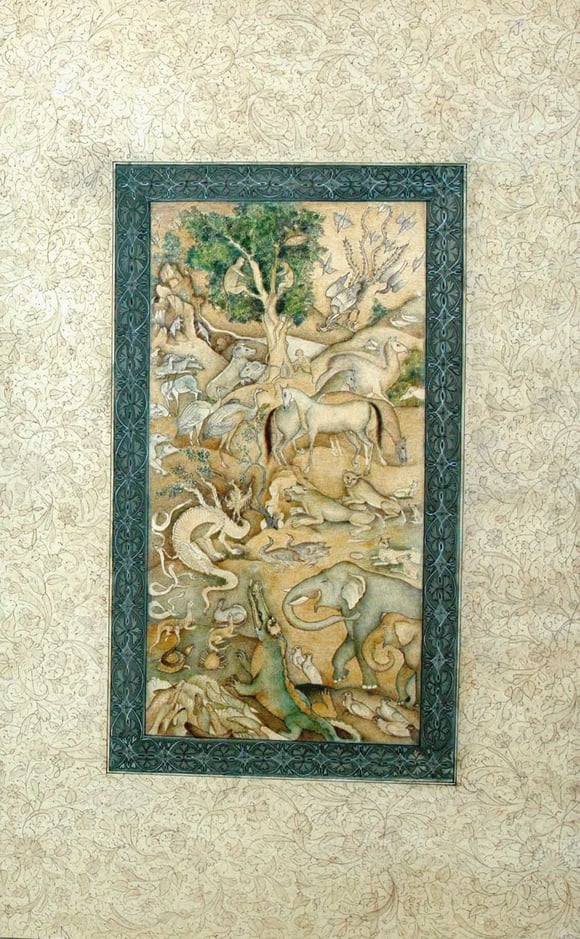
After the great fifteenth-century Timurid master Kamal ud-Din Bihzad · the painter whose work shaped the entire subsequent tradition of Persian and Mughal miniature. The painting engages with Bihzad's encyclopaedic treatment of the animal world, each creature rendered with the observational intensity and command of colour that made his workshop the measure against which all later miniaturists were judged.
Studies & Details